
Chelsea Acton FamousParenting: The Influencer Changing How We Parent Today
FamousParenting Chelsea Acton has become a frequently searched phrase in online parenting content. Articles connected with the name commonly discuss positive discipline, emotional awareness, family communication, screen-time boundaries, routines, and raising confident children.
There is, however, an important distinction readers should understand. Although numerous websites describe Chelsea Acton as a parenting influencer, educator, blogger, coach, or public personality, detailed claims about her biography are difficult to verify through strong primary sources. Even different online articles provide conflicting descriptions of her professional background.
That does not make the parenting topics associated with the search term useless. Many of the principles discussed under the Chelsea Acton FamousParenting label overlap with mainstream guidance from organizations such as the CDC and American Academy of Pediatrics. The useful approach is therefore to separate verifiable parenting principles from unverified personal claims.
Read also: TTweakHotel Discount Codes: How to Find and Verify Hotel Deals in 2026
Chelsea Acton Profile Biography Table
Online biographies of Chelsea Acton vary considerably, so presenting specific ages, qualifications, family details, earnings, employers, or educational credentials as established facts would be misleading. The following table separates what appears online from what can currently be established more responsibly.
| Profile Detail | What Can Be Said Responsibly |
|---|---|
| Name | Chelsea Acton |
| Known online for | Parenting-related articles associated with “FamousParenting” |
| Commonly described as | Parenting influencer, blogger, educator, coach, or mother |
| Parenting themes | Communication, routines, positive discipline, emotional connection, technology, and family life |
| Professional qualifications | Not clearly established through reliable primary documentation |
| Education | Various websites make claims, but no consistently documented qualification was located |
| Social media following | No clearly verified official account or audience figure should be assumed |
| Published books | A clearly verifiable traditionally published title called The FamousParenting Method could not be established |
| Brand partnerships | Individual partnerships should be verified before being presented as factual |
| Relationship with FamousParenting.com | The website publishes articles about Chelsea Acton, but that alone does not establish ownership or an official professional role |
FamousParenting.com itself has published several articles describing Chelsea Acton and different versions of her background. One June 2026 article says she began as a classroom teacher, while another describes her public profile differently. This inconsistency is one reason detailed biography claims deserve caution.
The Rise of Chelsea Acton and FamousParenting
The rise of famousparenting Chelsea Acton is unusual because the search term has spread across numerous parenting and lifestyle sites even though the underlying biography remains difficult to document independently.
An early FamousParenting.com article published in April 2024 discussed Chelsea Acton as a figure associated with modern parenting advice. Later pages expanded the story around routines, emotional intelligence, attachment, discipline, family life, and digital habits.
By 2025 and 2026, many other websites were publishing their own versions of the story. Some describe her as a coach, some as an educator, some as an influencer, and others treat “Chelsea Acton Famous Parenting” more broadly as a collection of parenting ideas.
That pattern is important for readers. Online repetition does not automatically verify a biography. A claim repeated across multiple secondary blogs may still trace back to the same uncertain source.
The stronger value of the topic lies in the modern parenting themes associated with it rather than celebrity-style personal details.
What Makes FamousParenting Unique?
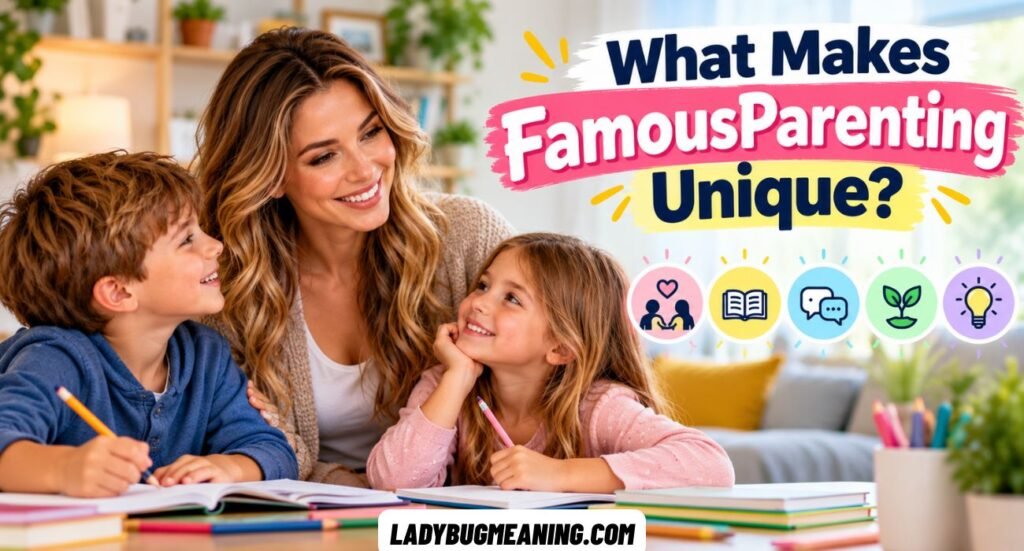
The content commonly associated with FamousParenting emphasizes parenting that combines structure with emotional understanding.
Rather than defining successful parenting as complete obedience, the approach usually encourages parents to understand why a child behaves in a certain way while still setting reasonable boundaries.
Common themes include positive reinforcement, emotional validation, predictable routines, active listening, age-appropriate responsibility, respectful discipline, parental self-regulation, and healthier technology habits.
These concepts are not exclusive to Chelsea Acton.
For example, CDC parenting resources recommend giving children clear directions, praising desired behavior, communicating positively, and using consistent consequences. The CDC also describes children’s behavior as a form of communication and encourages parents to combine connection with appropriate behavioral guidance.
This overlap is useful because parents can evaluate an online parenting idea against established child-development guidance instead of relying solely on an influencer’s popularity.
Social Media and Digital Presence
Many articles about Chelsea Acton claim that her popularity grew through social media, short videos, online discussions, blogs, podcasts, or parenting communities.
Those claims should be treated cautiously unless an article links directly to a verified account belonging to the person being described. Search results alone are not enough to confirm follower numbers, viral-video statistics, professional collaborations, or ownership of particular profiles.
The broader idea behind parenting through digital media is much easier to evaluate.
Social platforms allow parents to discover practical solutions quickly. A short video can demonstrate how to respond to a tantrum, create a bedtime routine, introduce household responsibilities, or speak calmly during conflict.
But social media parenting advice has weaknesses. Short videos remove context. What works for a preschooler may not work for a teenager. A strategy appropriate for one child’s temperament or developmental needs may be ineffective for another.
Parents should therefore treat social content as a starting point for learning rather than a universal rulebook.
Her Book: The FamousParenting Method
Some online pages refer generally to Chelsea Acton having written books, developed programs, created courses, or produced parenting resources. However, a clearly documented mainstream publication titled The FamousParenting Method could not be independently established from reliable publishing information during research for this article.
For that reason, it should not be described as a confirmed published book without stronger evidence such as a publisher page, ISBN record, author listing, or official sales listing tied clearly to the same person.
This distinction matters for E-E-A-T.
A website should not transform an unsupported statement into a fact merely because competing pages repeat it.
Readers interested in a specific Chelsea Acton book should check the author name, ISBN, publisher, publication date, and official retailer or library record before purchasing or citing it.
Parenting Philosophy Breakdown
The parenting philosophy most commonly associated online with Chelsea Acton FamousParenting can be understood through several broad principles.
Positive Reinforcement Over Punishment
Positive reinforcement means noticing and encouraging behavior that parents want children to repeat.
Instead of focusing exclusively on mistakes, a parent might recognize cooperation, patience, effort, honesty, responsibility, or emotional self-control.
For example, rather than saying only, “Stop making a mess,” a parent could provide a clear instruction and later recognize the desired behavior: “Thank you for putting your toys back in the box.”
This general approach is supported beyond influencer culture. The American Academy of Pediatrics recommends positive reinforcement, limit setting, redirection, and clear expectations instead of spanking, humiliating, threatening, or shaming children.
The CDC similarly recommends specific praise because it helps children understand exactly which behavior is being encouraged.
Positive parenting does not mean having no consequences. Children still need limits. The goal is to teach rather than frighten.
Technology as a Tool, Not an Enemy
Modern parenting cannot realistically pretend phones, tablets, games, online learning, video calls, and social media do not exist.
A more practical approach asks what children are doing with technology, when they are using it, whether it interferes with sleep or relationships, and whether the content is appropriate.
The American Academy of Pediatrics recommends family discussions and media plans that consider both children’s and adults’ digital habits. Its guidance also encourages predictable technology routines and reasonable family-wide boundaries rather than expecting children to follow rules adults ignore.
Technology can support education, creativity, communication, and entertainment. Problems arise when digital use crowds out sleep, physical activity, face-to-face connection, school responsibilities, or other developmental needs.
Parents therefore benefit from focusing on balance, content quality, safety, context, and family habits, not simply counting minutes.
Communication Is Everything
Children are more likely to communicate openly when they believe a parent will actually listen.
Active listening involves more than waiting for a child to stop talking. It means paying attention, trying to understand the child’s perspective, identifying feelings, and responding without immediately dismissing the concern.
CDC guidance emphasizes active listening as a way to strengthen parent-child relationships. It recommends giving children full attention, reflecting what they have communicated, and helping them name emotions.
Consider a child who says, “I hate school.”
Immediately replying, “No you don’t” closes the discussion.
A more useful response might explore what happened that day. The problem could involve friendship conflict, difficulty with an assignment, embarrassment, bullying, tiredness, or something completely different.
Listening does not mean agreeing with every demand. Connection and boundaries can exist together.
Read more: Why Top CEOs Choose Pedro Paulo Executive Coaching
From Gentle Parenting to Positive Discipline: Understanding the Difference
One weakness in much online parenting content is that terms such as gentle parenting, attachment parenting, positive parenting, respectful parenting, and positive discipline are sometimes treated as if they mean exactly the same thing.
They do not.
Gentle or respectful parenting generally emphasizes empathy, emotional regulation, and avoiding fear-based discipline. Positive discipline focuses on teaching desirable behavior through clear expectations, reinforcement, appropriate consequences, and consistency.
Attachment-related ideas focus more broadly on responsive caregiving and emotional security.
Families do not need to adopt a parenting label perfectly. They can use evidence-informed principles that suit their child’s age, temperament, developmental level, culture, safety needs, and family circumstances.
A parent can be warm and still say no.
A parent can validate anger without allowing hitting.
A parent can understand disappointment without changing every boundary.
The healthiest interpretation of compassionate parenting is not unlimited freedom. It is warmth combined with appropriate structure.
Parenting in the Public Eye
Public parenting introduces a challenge previous generations rarely faced at the same scale: a child’s childhood can become permanent online content.
Family creators may discuss school achievements, tantrums, medical conditions, embarrassing stories, birthdays, photographs, disciplinary moments, and private family disagreements in front of large audiences.
Parents should consider not only whether a post is entertaining but whether the child may later wish it had remained private.
Important questions include whether the content reveals a child’s school, regular location, health information, embarrassing behavior, private conversations, or identifying routines.
As children mature, involving them in decisions about sharing their images and stories can also help teach consent and digital responsibility.
These issues apply regardless of whether a parent has ten followers or ten million.
Challenges Chelsea Has Faced
Claims about specific controversies, personal struggles, media criticism, family difficulties, or professional setbacks involving Chelsea Acton should not be invented without reliable evidence.
A more defensible observation is that the online Chelsea Acton story itself has a credibility challenge.
Different websites provide different professional histories. Some call her an influencer, some a teacher, some a parenting expert, and some describe books, workshops, partnerships, or courses without linking to primary documentation. One recent analysis of the search term similarly noted the lack of strong primary evidence behind many detailed biographical claims.
For readers, this offers a broader lesson about parenting content: evaluate the advice separately from the personality promoting it.
Useful guidance should withstand questions such as:
Does it fit the child’s developmental stage?
Does it preserve physical and emotional safety?
Does it come from a reliable source?
Can the claim be checked?
Does the advice acknowledge exceptions?
Is professional help recommended when a situation goes beyond general parenting guidance?
Those standards matter more than popularity.
Global Influence and Community Building
Digital parenting communities can cross geographic boundaries almost instantly. Parents from different cultures can discuss sleep routines, picky eating, school stress, sibling conflict, screen habits, chores, emotional regulation, and work-family balance.
This access can reduce isolation and introduce families to strategies they had not previously considered.
However, parenting is influenced by culture, household structure, finances, disability, working hours, housing, access to childcare, education systems, and family support.
Advice designed for a two-parent household with flexible schedules may be unrealistic for a single parent working long shifts. A large family’s routines may differ from those of an only child. Children with developmental or medical needs may require individualized approaches.
That is why community advice works best when it offers principles that can be adapted, rather than presenting one family routine as the correct solution for everyone.
Collaborations and Brand Partnerships
Online profiles sometimes describe Chelsea Acton as collaborating with brands, psychologists, educators, therapists, or other professionals.
Specific partnerships should not be presented as established unless reliable documentation identifies the organizations, dates, campaign, or participants involved.
This is especially important with parenting products.
Sponsored content creates a financial relationship between a creator and a brand. That does not automatically make the recommendation unreliable, but readers deserve transparency.
Before purchasing a product promoted by any parenting influencer, consider who makes it, what problem it claims to solve, whether the creator is being paid, whether safety claims are supported, whether independent reviews exist, and whether the product is developmentally appropriate.
For medical, psychological, nutritional, or developmental issues, an advertisement or influencer recommendation should never replace qualified professional care.
Practical FamousParenting Ideas Parents Can Use
Families interested in the positive ideas associated with FamousParenting do not need to completely redesign their household.
Small changes are easier to maintain.
Start by choosing one repeated conflict, such as getting ready for school. Give a short, specific instruction instead of several instructions at once.
Notice desirable behavior quickly. Specific recognition such as “You put your school things away without being reminded” communicates more information than a general “good job.”
Create a few clear household expectations instead of dozens of changing rules.
Use predictable consequences that children understand in advance.
Give children age-appropriate responsibilities.
Create regular moments when phones and other distractions are put aside.
Listen to the reason behind difficult behavior while maintaining necessary limits.
After conflict, reconnect rather than allowing one mistake to define the rest of the day.
These practices are consistent with CDC recommendations emphasizing clear directions, praise, communication, connection, and consistent responses to behavior.
What Parents Should Not Copy Blindly From Influencers
No parenting creator knows your child as well as the adults responsible for that child’s everyday care.
Avoid treating a thirty-second clip as individualized behavioral advice.
Do not assume that a routine shown online reflects the creator’s entire household reality.
Do not compare your family’s difficult moments with another person’s edited highlights.
Be particularly cautious when content makes dramatic promises such as eliminating tantrums, guaranteeing academic success, curing behavioral problems, or producing a particular personality type.
Normal childhood development is complex.
Persistent behavioral, developmental, emotional, sleep, learning, or mental-health concerns may require discussion with a pediatrician or another appropriately qualified professional.
How to Evaluate FamousParenting Advice Before Using It
A useful parenting recommendation should pass several simple checks.
First, identify the actual claim. “This helped my family” is different from “this method works for every child.”
Second, look for evidence from reputable sources rather than relying on reposts.
Third, check whether the advice is appropriate for your child’s age.
Fourth, consider safety. Any recommendation involving physical punishment, humiliation, dangerous sleep practices, medication, restrictive diets, or serious medical concerns deserves additional scrutiny.
Fifth, test ordinary behavioral strategies gradually. Changing five routines simultaneously makes it difficult to know which change helped.
Finally, remain flexible. Parenting strategies often need adjustment as children develop.
See also: Eye Itching Spiritual Meaning
Future of FamousParenting
Parenting content will likely become even more connected to technology, online communities, digital safety, children’s privacy, and changing family routines.
The most useful parenting platforms will be those that become more transparent rather than simply more popular.
Readers increasingly benefit from seeing distinctions between personal experience, professional opinion, advertising, and research-backed advice.
For the Chelsea Acton FamousParenting topic specifically, future primary documentation could make the biography clearer. Verified professional profiles, direct interviews, publisher records, identified social accounts, or documented partnerships would make individual claims easier to establish.
Until then, publishers should avoid turning uncertain details into facts simply to create a more dramatic biography.
FAQs About Chelsea Acton FamousParenting
Who is Chelsea Acton from FamousParenting?
Chelsea Acton is a name widely associated online with parenting content covering communication, discipline, routines, emotional connection, and family life. However, many detailed biographical claims about her remain difficult to independently verify through strong primary sources.
Is Chelsea Acton a real parenting expert?
Multiple websites describe her as an influencer, coach, educator, teacher, blogger, or parenting expert, but clear professional credentials supporting all of those descriptions are not consistently documented. It is safer to evaluate individual parenting recommendations using established sources rather than relying on the title alone.
What is FamousParenting Chelsea Acton known for?
Content using the term generally focuses on positive discipline, clear boundaries, emotional intelligence, family routines, communication, screen habits, parental self-care, and building stronger parent-child relationships.
Does Chelsea Acton have a book called The FamousParenting Method?
A reliably documented published book under that exact title could not be confirmed during research for this article. Readers should look for an ISBN, recognized publisher record, library catalog entry, or verified author page before treating the title as an established publication.
Does Chelsea Acton promote positive reinforcement?
Many online articles associated with her name emphasize encouragement and positive discipline. Independently of those claims, positive reinforcement and specific praise are also recommended in parenting resources from the CDC and American Academy of Pediatrics.
What does FamousParenting say about screen time?
Online content connected with the topic generally favors balanced rather than fear-based technology management. The AAP likewise recommends family media planning, appropriate boundaries, healthy adult modeling, and attention to content quality and family routines.
Is the Chelsea Acton parenting approach suitable for every family?
No parenting method should be applied identically to every child. Age, temperament, developmental needs, household structure, culture, safety considerations, and family circumstances all matter.
What is the best lesson from Chelsea Acton FamousParenting?
The most useful takeaway is to combine connection with structure: listen to children, communicate clearly, encourage desirable behavior, maintain reasonable boundaries, and adapt parenting strategies as children grow.
Conclusion
The popularity of famousparenting Chelsea Acton reflects a larger interest in parenting that moves away from fear and toward communication, emotional understanding, positive reinforcement, thoughtful boundaries, and healthier family routines. Many of these ideas have parallels in established guidance from organizations including the CDC and American Academy of Pediatrics.
At the same time, readers should distinguish useful parenting principles from an uncertain online biography. Claims about Chelsea Acton’s qualifications, books, social-media reach, partnerships, career, or personal life should be verified before publication as facts. The strongest lesson from the topic is therefore broader than one influencer: good parenting information should be practical, adaptable, transparent, safe, and supported by trustworthy evidence.