Baby Ladybug Meaning: A Self Mid-Change
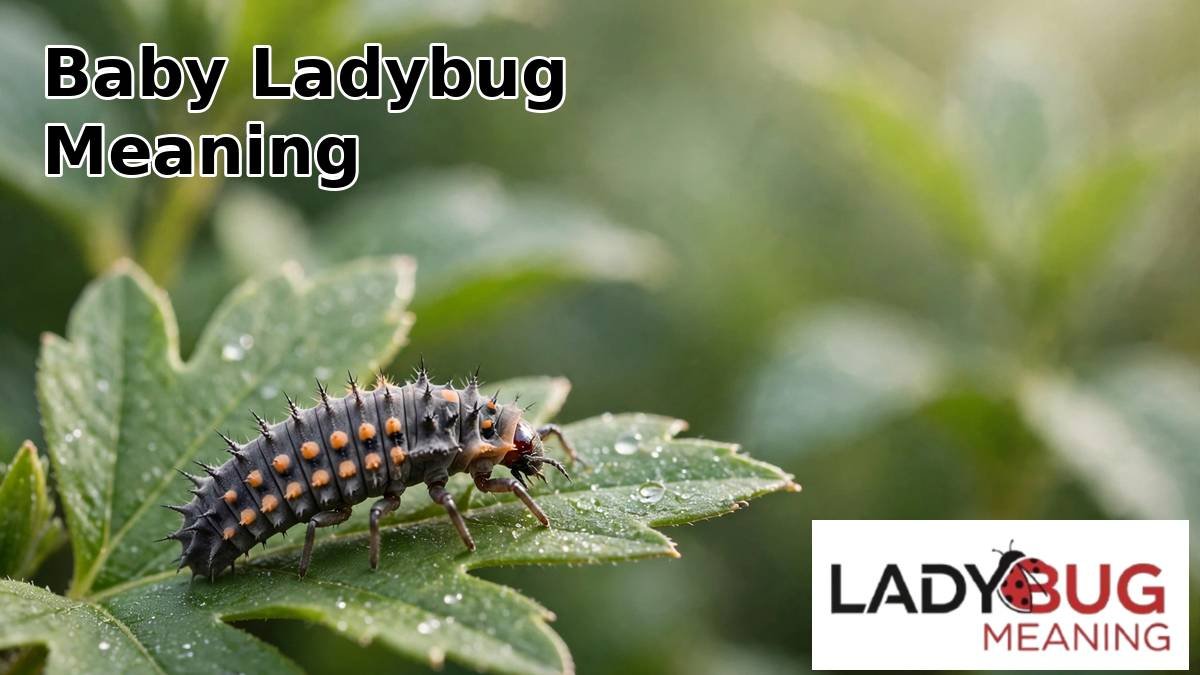
It is not small, round and red. The baby ladybug on the underside of your rose leaf is a spiky grey-black creature with orange markings, looking nothing like the beetle it will become. The baby ladybug meaning starts with a two-part question: which creature is this, and what is it said to mean?
Identification does all the work here: the young ladybug is the most misread insect in the garden. The larva — the stage everyone finds — is taken for a pest and killed by gardeners who would welcome the adult. The pupa gets the opposite misreading: a living thing in its stillest stage, mistaken for a dead one.
This page gives the young encounter the full treatment our guide to ladybug meaning promises: the four stages from egg to adult, the checks that tell a larva from the pests it is confused with, where and when the young stages appear, and the brief reading — the hub’s transformation reading, kept at the hub’s length.
Baby Ladybug Meaning: The Quick Answer
Quick Answer: The baby ladybug meaning is the hub’s transformation reading at its source: new beginnings, and a self mid-change. A baby ladybug is a spiky grey-black larva, marked with orange, that hunts aphids for two to three weeks, then a still, glued-down pupa for a week or two, before the adult emerges pale and prints its colours within hours.
The rest of this page is the detail behind that answer — the creature first, then the reading.
Is a Baby Ladybug Good Luck?
Yes — and in the most literal way the tradition offers, because the luck was always the appetite.
The founding scene of the whole ladybug tradition is farmers watching ladybirds eat the aphids that were eating the crops, and the larva is the hungriest chapter of that story: extension guidance is plain that larvae eat more pests than the adults do.
A baby ladybug on your plants is not a promise of protection at some future date. It is the protection, already at work, in its working clothes.
The Stage Most Often Killed by Mistake
That is also why this encounter carries the cluster’s one firm instruction, and it is practical before it is symbolic: the young ladybug is the stage most often killed by mistake.
Gardeners who would never harm the red adult spray or squash the spiky grey larva on sight, reading it as one of the pests it is actually eating.
The tradition’s old rule — never harm a ladybug — turns out to matter most exactly where the beetle is hardest to recognise. What the checks are for is that moment: beetle first, verdict after.
The Egg and the Larva: Where the Baby Stage Lives
The hub states the whole arc in one sentence, and it is worth carrying whole: the whole life cycle — egg, spiky grey larva, pupa, adult — takes about four weeks, and the female lays her eggs on leaves right beside aphid colonies so the larvae hatch inside their food supply.
Every stage of the young life is arranged around that one decision. The baby ladybug is born inside its first meal.
The Eggs
A ladybug’s eggs are tiny, elongated ovals — bright yellow in most species, yellow to orange-red across the family — laid standing upright in tight clusters on the underside of a leaf or along a stem.
University of Minnesota Extension puts the cluster at five to thirty eggs, and it is the placement that gives them away: they are found on plants where aphids, mealybugs or scale insects already are. A cluster of small yellow eggs under a leaf in late spring is not an infestation beginning. It is a guard being posted.
Some species even lay extra infertile eggs alongside the fertile ones — a packed lunch for the first hatchlings if prey is scarce, which is how arranged this beginning is.
The Larva
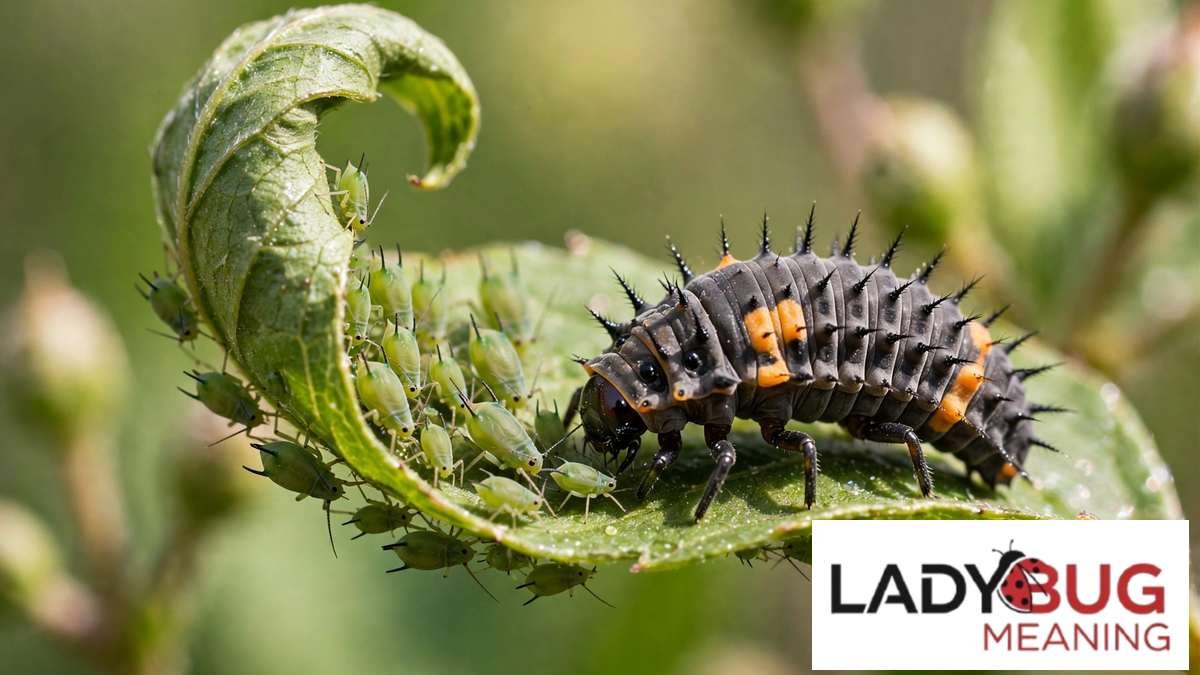
What hatches is the creature this page exists to name. The newborn larva is a millimetre-scale speck. The grown one is an elongated, tapering hunter of up to a centimetre or so, grey to blue-grey or black in ground colour, spotted or banded with white, yellow, red or orange depending on the species.
It is armoured with the feature everyone remembers: rows of pointed bumps and spines, which give it the alligator look that frightens gardeners. It grows through four stages — instars — shedding its skin three times, and the colours brighten as it goes, so the oldest larvae are the most vividly marked.
What the Larva Eats
The larval stage lasts about two to three weeks (the two-spot’s runs around three), and it is spent almost entirely eating: aphids first, but also scale insects, mites, whiteflies and the eggs and young of other insects.
Larvae and adults eat the same foods — unlike a butterfly, the young ladybug is not on a different diet from its parents; it is simply hungrier. Britannica’s measured example, the one our hub cites, is a single convergent ladybug larva eating 300 aphids in two weeks.
The Pupa and the First Hours as an Adult
When the larva has eaten enough, it does the strangest thing in the whole cycle: it glues itself down and stops. The full larva fixes its tail end to a leaf, a stem or a piece of bark, hunches, and lets its legs fuse to its body — and the pupa stage begins.
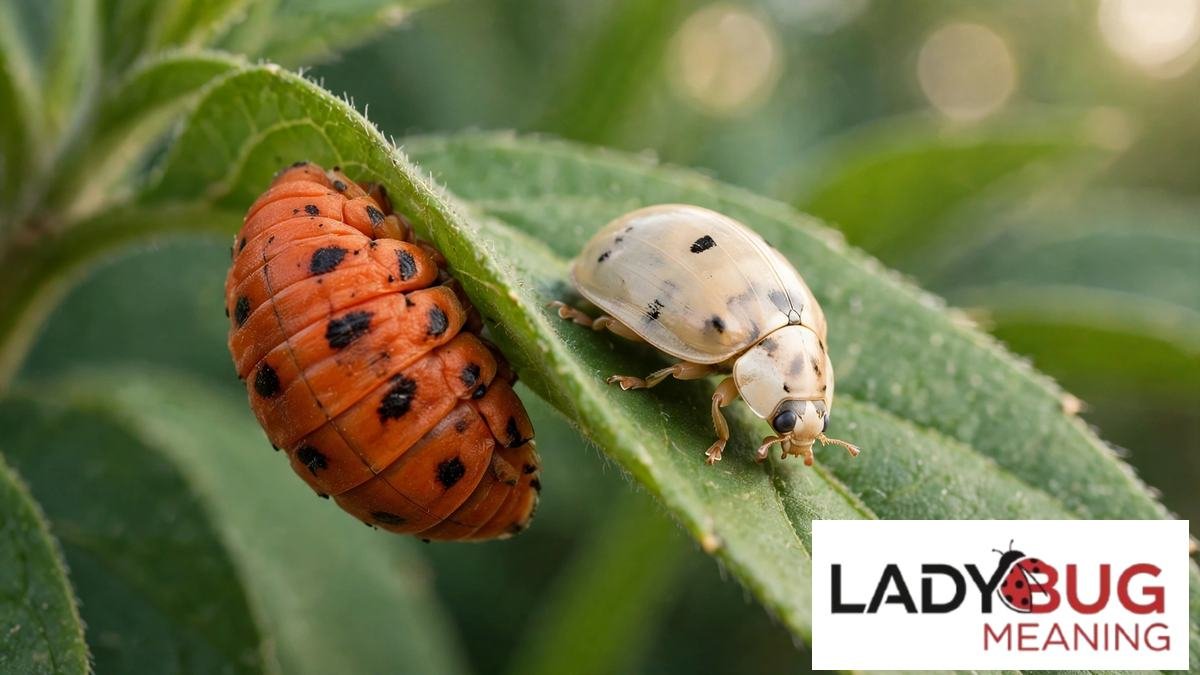
The pupa is the stage finders misread as death, so its description deserves care: orange to red with black spots in many common species, with a shrivelled, dried look, fixed in place and apparently lifeless.
It is not lifeless. A pupa is mostly immobile, but it can move its head end in response to irritation — Minnesota Extension’s plainer version is that pupae may wiggle if disturbed — and it darkens as the adult inside readies itself to emerge.
The Pupa’s Defences
The stillness is defended stillness, too: the chemical defences that guard the whole family matter most, the record notes, for the one stage that cannot run.
The First Hours as an Adult
The pupa lasts one to two weeks — seven to ten days in the two-spot. Then the shell splits and the adult climbs out, and here the young story has its last surprise: the finished beetle emerges soft and pale, its wing cases lighter in colour with no pattern at all.
The colours develop within hours and the spots print through as the shell hardens — though full darkening can take weeks in some species. So the pale, spotless “baby-looking” beetle on a morning leaf is not a baby at all.
It is the adult in its first hours, wearing the final stage’s shape with the colours still setting. Spots, the hub is firm about, are fixed by species and not by age: a seven-spot is born with seven. Nothing a ladybug does makes it grow more.
Telling a Ladybug Larva from a Pest
This is the section the whole page is for, because the mistake it prevents is made in gardens every spring.
Minnesota Extension states the root of it in one line — larvae do not resemble adults — and draws the conclusion itself: being able to identify all life stages can help you identify and protect these beneficial insects.
Four checks, run in this order, will name nearly every young ladybug you meet.
- Watch what it is doing, first. A ladybug larva hunts. It stalks along leaves and stems, seizes soft-bodied prey and eats aphids in the open, in daylight, one after another. A creature methodically eating the leaf itself is doing something else entirely — see the exception below. Behaviour is the fastest check there is: hunter on the leaf, or diner of the leaf.
- Read the shape. Long body, tapering toward the back end; six true legs near the front, doing visible walking work; a squared head end; and, in most common species, the pointed bumps and spines that make it look like a tiny grey alligator. From above, Minnesota Extension notes, larvae do not show a clear head and six distinct legs at first glance — look again, from the side, and the legs are there.
- Read the colours. Grey, blue-grey or black ground, marked with white, yellow, red or orange spots or bands — the warning colours of the family worn in larval dress, and brighter in the older larvae. A soft, pale, grub-like creature without markings and without visible legs is not this; a ladybug larva is armoured, patterned and on foot.
- Read the company it keeps. Ladybug young are found where their food is: among aphid colonies on roses, beans, currants and a hundred other plants, near the yellow egg clusters they hatched from, in the company — often — of the round adult beetles themselves. A spiky grey hunter in the middle of an aphid colony has told you its job and its name at once.
The Black-Beetle Confusion
The dark dress causes a second confusion worth settling here. A big late-stage larva — black, spiky, orange-marked — is often taken for a strange black beetle in its own right, and finders arrive from our guide to the black ladybug asking whether the black beetle is a young one.
It is not: every black ladybird is a finished adult in its adult dress, and no young ladybug is round, domed or smooth-shelled at all. The creature on your leaf is younger than any beetle in that guide — it is not a small version of the adult. It is the stage before adulthood exists.
The One Honest Exception
One honest exception, so the checks stay trustworthy: a few members of this family eat plants instead of prey — the Mexican bean beetle is the famous one — and their young feed on the plant itself, bean leaves especially.
That is the first check doing its work. A larva chewing the leaf is a different conversation; a larva stalking across it, jaws working on aphids, is a guardian mid-shift.
Where and When You Find the Young Stages
The young ladybug’s calendar is the aphids’ calendar. In temperate climates the adults breed from late spring into early summer, the eggs follow the first aphid colonies, and because there are multiple generations a year, Minnesota Extension’s summary holds for the whole season: any life stage can appear at any point in the summer.
Here is the young map, with the plain explanation kept beside the reading, as everywhere on this site.
| What you found | What tradition says | What is usually happening |
|---|---|---|
| A cluster of tiny yellow eggs standing upright under a leaf | A beginning in its plainest form; new life arriving where it is needed | A female has laid beside an aphid colony so the larvae hatch inside their food supply — the guard posted before the pests peak |
| A spiky grey-black larva hunting among aphids | The luck in its original form; what you are tending is protected | A young predator at work — larvae eat more pests than the adults do, and this is the hardest-working stage of the whole cycle |
| A bigger larva, brighter-marked, on a curled leaf | Growth under way; a self mid-change | A late-stage larva between moults — four stages in all — feeding hard before the still stage, its colours brightening as adulthood nears |
| An orange, shrivelled pupa glued to a leaf, not moving | Change that looks like nothing while it is happening | The pupa: fixed by its tail end, rebuilding larva into beetle; it may wiggle if disturbed, and it darkens as the adult readies to emerge |
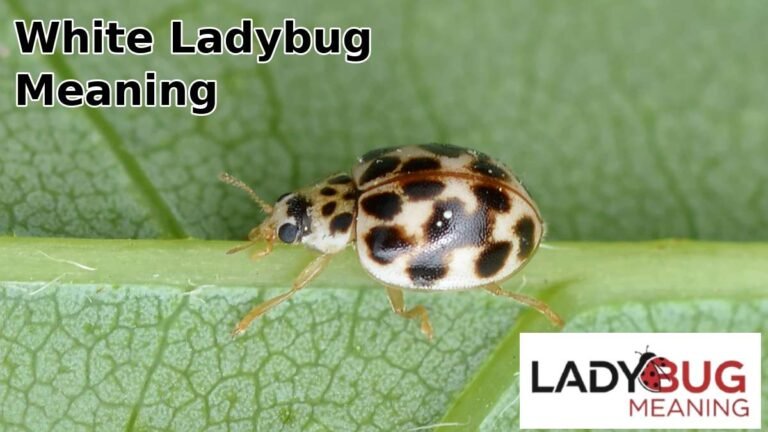
| A pale, soft-looking adult with faint spots, or none | A fresh start — a blessing without conditions; a self whose colors are still setting | A brand-new adult in its first hours: shell still hardening, pattern printing through; its spots were fixed by its species, not earned with age |
| A yellowish spiny larva eating the leaf itself | Not the guardian — the family’s one exception, read plainly | Most likely a plant-feeding member of the family, like the Mexican bean beetle’s young — the rare relative that eats the crop instead of its pests |
The Eggs Deserve the Last Word
The eggs deserve the last word in this section, because they are the find that starts the most panics. A tight stand of tiny yellow eggs under a leaf reads, to a worried gardener, as the beginning of an infestation — and the instinct is to scrape them off or spray.
Read them the other way: eggs are laid where aphids already are, by a mother who has surveyed the plant and judged it worth guarding. The cluster is evidence the plant was chosen, and what hatches from it will spend its first weeks eating the very outbreak the gardener feared.
What a Baby Ladybug Is Said to Mean
So what is the baby ladybug meaning, once the creature is named? This page can be unusually honest about it, because the young ladybug’s reading is not a separate folklore of its own — there is no old custom about larvae, and this page will not invent one.
What the young stages carry is the hub’s transformation theme itself, and they carry it because they are its evidence: every phrase here is the hub’s, given at the hub’s strength, in the one place the beetles underneath it are actually on stage.
Transformation and New Beginnings
The hub’s own section, and its wording bears carrying whole: egg, larva, pupa, adult — nothing in the sequence resembles the stage before it, and the finished beetle even spends its first hours pale and unmarked before its colors arrive.
Symbolism writers lean on that arc hard, and it bears the weight: the ladybug is the standing picture of a change that looks like nothing while it is happening and like renewal when it is done.
Of all the cluster’s pages, this is the one where the reading and the record are the same sentence — the transformation is not a metaphor laid over the beetle. It is the beetle’s timetable.
A Self Mid-Change
The hub’s summary of the whole tradition gives the young stages their second phrase: renewal — the beetle’s own journey from a spiky, earthbound larva to a winged adult makes it the tradition’s favorite picture of a self mid-change.
Read at its proper strength, a young ladybug sighting is taken as the picture of a change still in its working clothes: unglamorous, earthbound, mid-appetite — and pointed, with the reliability of a life cycle, at wings. It is a modern symbolism reading built on a real arc, offered as one.
A Fresh Start, Colors Still Setting
The third phrase belongs to the last young stage, the newly emerged adult, and it comes from the hub’s spot readings: no spots is read as a fresh start — a blessing without conditions, or a self whose colors are still setting — and the hub adds, in the same breath, that it is often literally a young beetle.
The pale beetle on the morning leaf is the tradition’s freshest start made visible: finished, whole, and not yet fully printed. What it asks of the finder is only the patience the stage itself is using — hours, while the shell hardens and the pattern arrives.
The Wider Spiritual Treatment
The wider spiritual treatment is kept complete in one place, and it is not this page. Our sister site’s guide to ladybug spiritual meaning carries the full fourteen readings the tradition gives a sighting, the transformation theme among them.
AnimalsHints has no separate baby ladybug post — the young stages are this site’s territory, which is why the encounter lives here and the deep spiritual shelf is a link away. This page stays with the creature: the larva on your leaf, named.
What to Do When You Find One
- Name the stage before you read it. Eggs, larva, pupa or first-hours adult — the four checks will place it. A young ladybug identified is most of the question answered, and all of the danger removed.
- Leave a hunting larva to its work. A larva among aphids is mid-shift in the garden’s pest control. Do not pick it up for a closer look; a disturbed ladybird of any stage can squeeze out a drop of bitter yellow defensive fluid, and handling costs the larva hunting time it cannot spare.
- Never spray first. The commonest way young ladybugs die is as bystanders: broad insecticides kill the hunters along with the pests, as Minnesota Extension warns plainly. If a plant is sprayed with the larvae on it, the aphids’ best enemy is removed at the exact moment it was winning.
- Do not move a pupa. A pupa is fixed to its leaf by its tail end; it cannot walk to safety and must not be prised off. If the leaf itself is in the way of necessary work, move the whole leaf, gently, to a sheltered spot nearby — pupa, leaf and all.
- If a larva is somewhere dangerous, walk it to safety. On a pavement, a path or a busy step, offer the edge of a leaf or a card, let it climb on, and set it down on a plant — ideally one with aphids on it, which is the whole world to a larva.
- And if the young beetle is not moving at all, check the stage before you read anything into it: stillness is the pupa’s design, and it may answer a disturbance with a wiggle. A motionless creature with a dome and wing cases is a different encounter — the adult at the end of its story, the one our guide to the dead ladybug covers, read there as a cycle complete, not a curse.
A Baby Ladybug in a Dream
Briefly, because the dream layer has its own treatment elsewhere in this cluster: a baby ladybug in a dream is read through the dream layer first — good things being tended out of sight — with the young stage adding the transformation note: something early, unfinished and growing in the right direction.
Dream readings are the youngest and least documented layer of the whole tradition, and the feeling the dream left behind is a better guide than any list. If the dream felt like a beginning being looked after, the tradition would say it was.
Frequently Asked Questions
What does a baby ladybug mean?
In the tradition, a baby ladybug carries the hub’s transformation reading: new beginnings, and a self mid-change. In the garden’s terms, you have found the ladybug in its youth: most likely a larva, the grey-black aphid hunter that does more pest control than the adult.
What does a baby ladybug look like?
Nothing like its parents. The larva is elongated and tapering, grey to black with white, yellow, red or orange markings, covered in pointed bumps and spines, with six working legs near the front. The adult’s first hours are pale and soft, spots still printing through.
How long does a baby ladybug take to grow up?
About four weeks, egg to adult; every stage shifts with species and weather. The two-spot’s version: eggs hatch in four to eight days, the larva feeds for three weeks, and the pupa lasts seven to ten days.
What do baby ladybugs eat?
Aphids, above all — and scale insects, mites, whiteflies and the eggs and young of other insects. Larvae eat the same foods as the adults; they simply eat more of them. Britannica records a single convergent ladybug larva eating 300 aphids in two weeks.
Is a baby ladybug dangerous?
No. No ladybird of any age can sting or carry disease, and a larva’s whole armoury is defensive: the spines that make it look fierce, and the drop of bitter yellow fluid — reflex bleeding — a disturbed ladybird can squeeze from its joints.
Should I get rid of ladybug larvae in my garden?
No — they are the best pest control the garden gets: removing them takes away the aphids’ hardest-working enemy at the moment it is winning. The exception is the larva eating the leaf itself — a plant-feeding member of the family, managed as the pest it is.
Why is the baby ladybug on my plant not moving?
Because it is not a larva any more — it is a pupa, and stillness is that stage’s design. The pupa is fixed to the leaf by its tail end, rebuilding the larva into the beetle, and it darkens as the adult inside readies to emerge.
Do baby ladybugs have spots?
Larvae have markings — spots and bands of white, yellow, red or orange on the grey or black ground — but not the adult pattern. The spots are fixed by species, not by age: a seven-spot is born with seven, and none are added as it grows.
Conclusion
The baby ladybug meaning turns out to be mostly a recognition — and, once recognised, the most practical lesson in this whole cluster. Ask which stage you met — eggs, larva, pupa or pale new adult — and the encounter is already explained.
What the tradition adds is the hub’s reading: transformation and new beginnings, a self mid-change, a fresh start with its colors still setting. Name the stage, leave it to its work, and never spray first. And if the young stages interest you, the encyclopedia’s account of the lady beetle family is the place to wander next.