Yellow Ladybug Meaning: Optimism, Clarity and New Beginnings
It is not red. The ladybug on the leaf is yellow — clear, lemon yellow, carrying black spots — and it stops you, because the storybook beetle never looks like this. The yellow ladybug meaning starts with the two questions every encounter on this site starts with: which beetle is this, and what is it said to mean?
The identification does nearly all the work here, because yellow is the ladybird colour with the most impostors. A few small species are yellow for life. But a great many yellow “ladybugs” are something else: a red ladybird in its first pale hours, or a cucumber beetle that is no ladybird at all.
This page gives the yellow encounter the full treatment our complete guide to ladybug meaning promises: the checks that name the beetle, the three genuinely yellow species, the impostor on the cucumber flowers, the newly emerged adult before its colours set, and the brief reading — the hub’s own, kept at the hub’s length.
Yellow Ladybug Meaning: The Quick Answer
Quick Answer: The yellow ladybug meaning is optimism, clarity and new beginnings — the reading in our hub’s colour table. The beetle is a yellow species like the mildew-eating 22-spot ladybird — or no yellow species at all, but a red ladybird in its first pale hours, or a cucumber beetle.
Everything below is the detail behind that answer — the beetle first, then the reading.
Is a Yellow Ladybug Good Luck?
Yes — a yellow ladybug carries the same welcome as every other ladybug, because the luck was never in the red. It was in the work. The founding scene of the whole tradition is farmers watching ladybirds arrive in the fields and eat what was eating the crops.
The yellow species do that work more quietly. The best-known of them does not hunt aphids at all: it grazes the white film of mildew off leaves, cleaning the plant a mouthful at a time. Protection, in yellow, looks less like a guard and more like a gardener.
One honest point about rarity, because yellow sightings are often sold as rare. The yellow species are not rare — the 22-spot is a common European beetle. They are small, low in the plants and easily walked past. A yellow ladybug is usually an overlooked beetle, not an uncommon one.
The Beetles You Most Likely Saw: The True Yellow Ladybirds
Three European species wear yellow as their adult colour, and between them they account for most true-yellow sightings. All three are small — none reaches half a centimetre — and two of the three are grazers rather than hunters, which makes the yellow corner of the family its quietest.
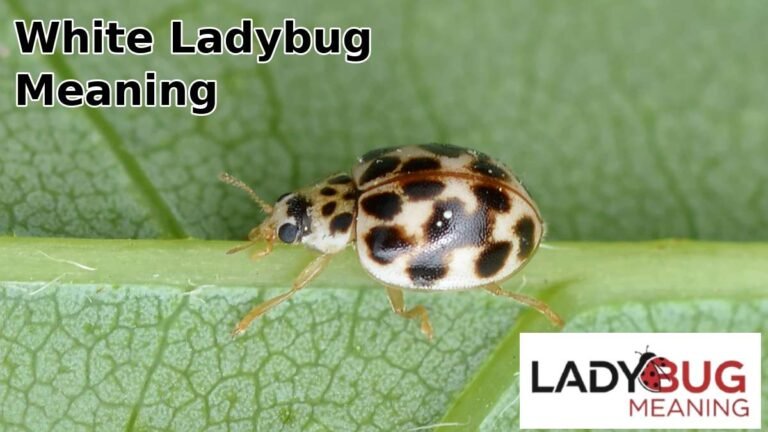
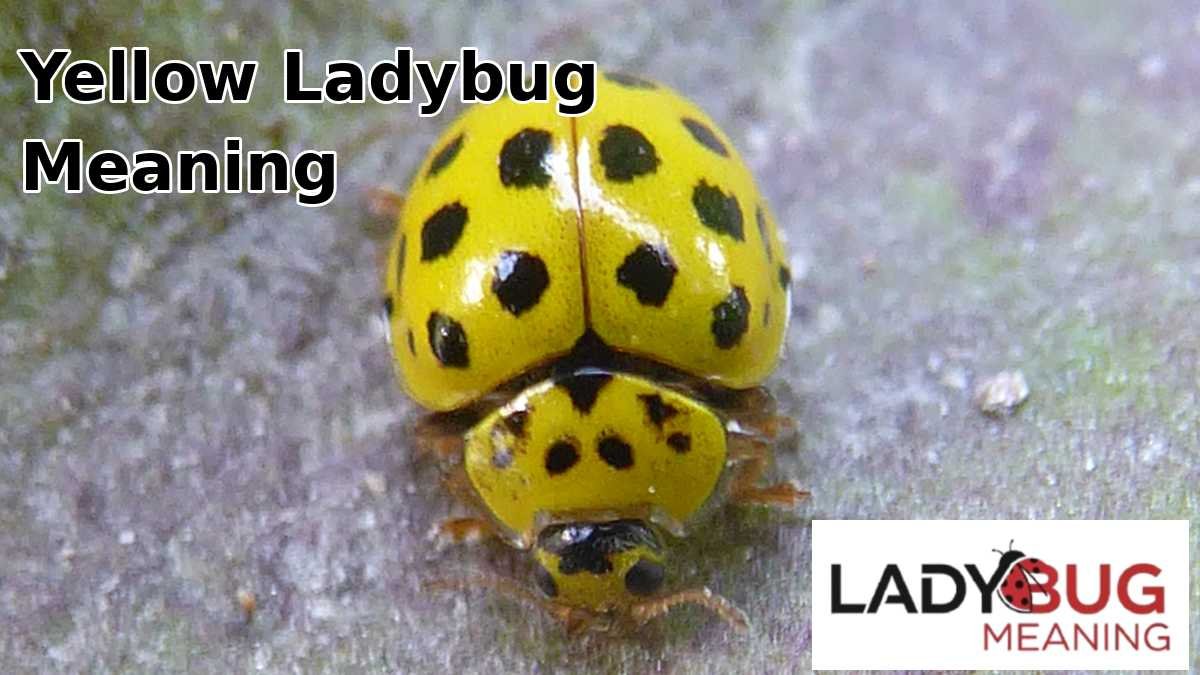
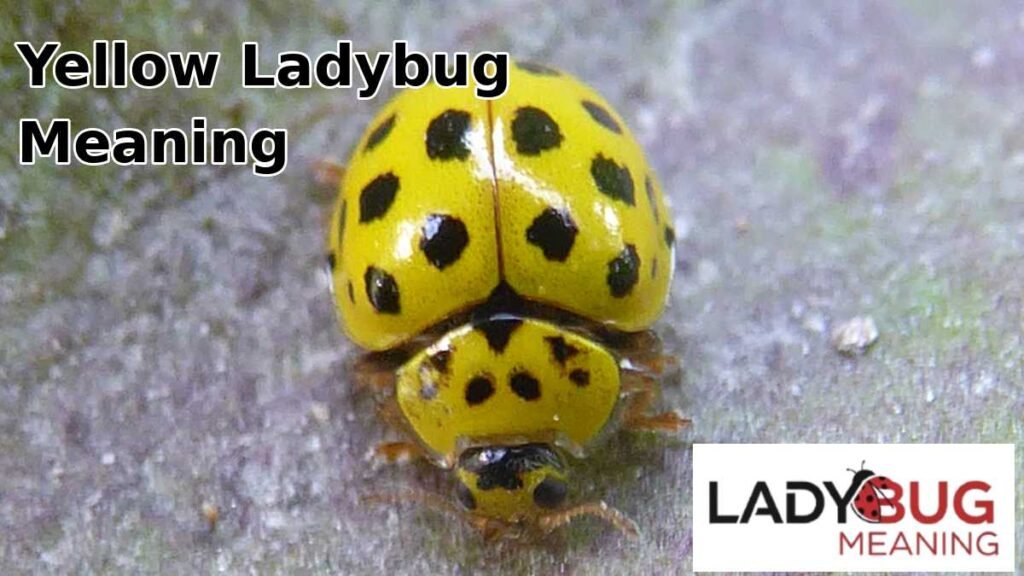
The 22-spot ladybird (Psyllobora vigintiduopunctata) is the yellow ladybug itself: clear lemon yellow, with twenty-two round black spots — eleven on each wing case — and five more on the shield behind its head.
It measures three to five millimetres, and Wikipedia’s record of its discovery is a diet note: it was found in Germany in 1874, eating mildew on leaves.
That diet is the species’ whole life. The 22-spot and its larvae graze on powdery mildew — the white, floury fungus that coats leaves — and barely touch aphids. A 22-spot on a mildewed leaf is not lost or resting. It is at its table, doing the plant a service no sprayer notices.
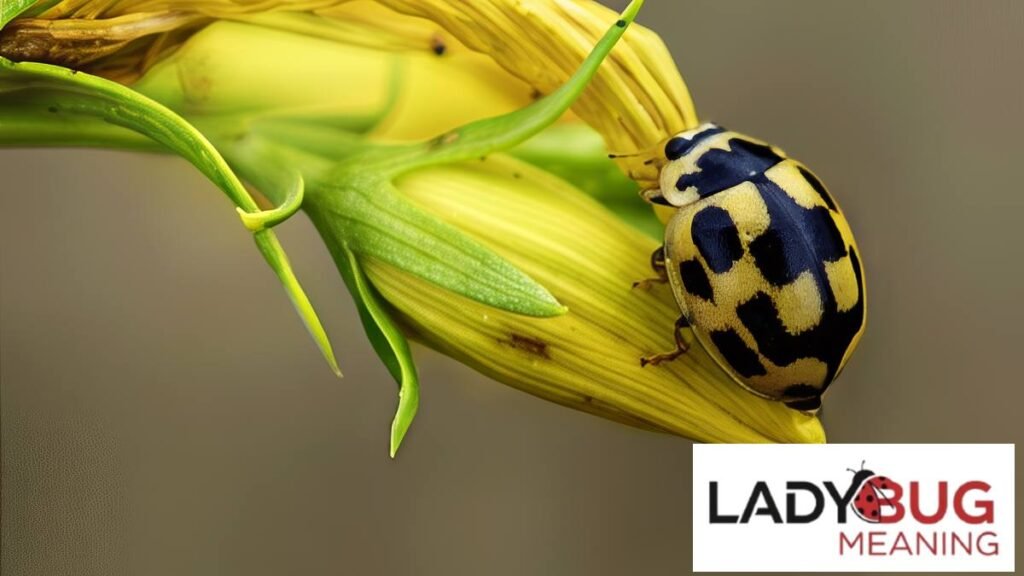
The 14-spot ladybird (Propylea quatuordecimpunctata) is the variable one. Its ground colour runs from cream through yellow to light orange — never red — under fourteen black, squarish spots that often fuse into larger markings, sometimes joining along the middle into an anchor shape.
In its darkest dress the yellow nearly disappears, and the beetle reads as black with pale spots — the confusion our guide to the black ladybug untangles. In its palest dress it is the brightest yellow of the three.
It is also the hunter of the set: a working aphid predator, widespread across Europe and Asia and now established in North America too.
The 16-spot ladybird (Tytthaspis sedecimpunctata) is the smallest, at two to three millimetres, and the palest: cream to beige-yellow, with a dark line running down the seam where its wing cases meet and spots that often fuse into lines beside it.
It lives low, in the grass layer — dunes, dry meadows, wasteland — and eats a mixed diet of aphids, rusts, mildew, pollen and mites. In winter it does something the others do not: it gathers in large companies on tree trunks, fence posts and logs to wait out the cold.
North America keeps a small cousin of the 22-spot: the twenty-spotted lady beetle, Psyllobora vigintimaculata, another mildew-eater. Honesty about its colour: it is cream-white rather than true yellow, and at under three millimetres it is the easiest beetle on this page to walk past entirely.
The Identification Checks, in Order
Four checks, run in this order, will name nearly every yellow ladybug you meet. They are arranged so the pattern speaks first and the decisive check — the shape — closes the case.
- Count the spots, and read their shape. Twenty-two round black spots on clear yellow names the 22-spot outright. Fourteen squarish spots, often fused, name the 14-spot. A dark line down the middle seam, with spots fused into lines, names the 16-spot.
- Check the size. Every true yellow ladybird is small: two to five millimetres, well under a fingernail’s width. A yellow beetle clearly bigger than that is already suspect, whatever its spots say.
- Watch what it is eating. A yellow beetle grazing the white film on a leaf is a ladybird at work. A yellow beetle eating the leaf itself — or the flowers of cucumber, squash or melon — is doing something no yellow ladybird does, and the next section names it.
- Read the body shape — the decisive check. A ladybird is a high, round dome with short antennae, barely visible from above. The impostor is longer and flatter, with antennae nearly half the length of its body. Shape settles what colour confuses.
One borderland case deserves its sentence. A large yellow-orange beetle, gathered with dozens of its kind on a sunny wall in autumn, is usually the Asian lady beetle in the pale end of its range — the subject of our guide to the orange ladybug, where its checks are set out in full.
The Yellow Ladybug That Is Not Yellow: The Newly Emerged Adult
There is a second yellow ladybug, and it is not a species at all. Every ladybird, of every colour, begins its adult life pale. The encyclopedia’s life-cycle account is plain about the moment: when the adult emerges, its wing cases start out softer and lighter in colour, with no patterns at all.
The colours develop within hours as the shell hardens, and the spots print through — though full darkening can take weeks in some species. So the soft, pale-yellow beetle sitting beside an empty pupa case is usually a red ladybird in its first morning, wearing the final shape with the paint still wet.
This is where the record and the reading shake hands, as they did on our baby ladybug page. The hub reads a spotless ladybug as a fresh start — a self whose colors are still setting. For the pale new adult, that is not a metaphor laid over the beetle. It is a description of it.
The Impostor: The Spotted Cucumber Beetle
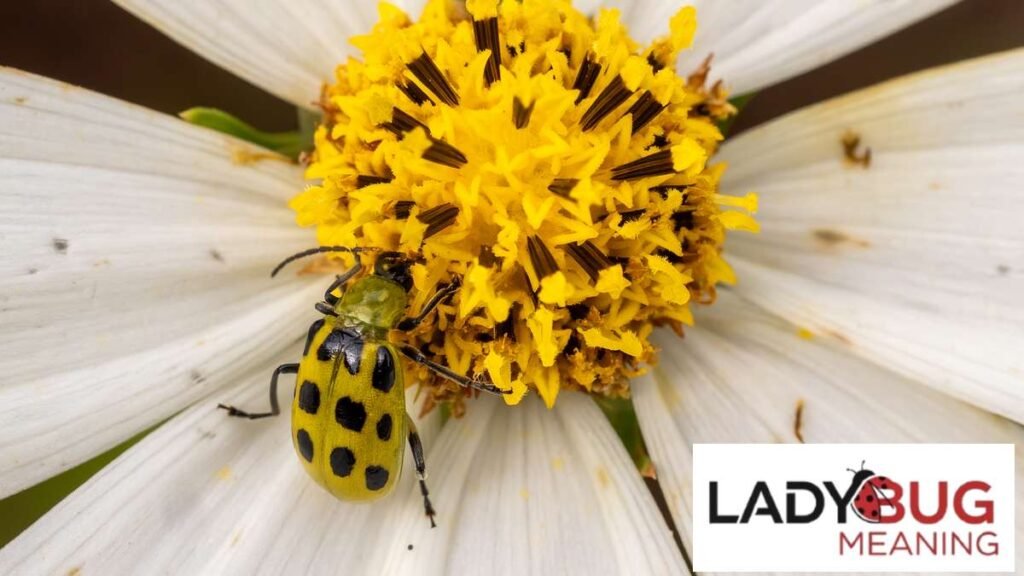
North America’s commonest yellow “ladybug” is not a ladybird. The spotted cucumber beetle, Diabrotica undecimpunctata, belongs to the leaf beetle family — a different family altogether — and wears greenish-yellow wing cases with six large black spots on each, twelve in all.
The giveaways are the ones the checks above end with. Its body is longer and flatter than a ladybird’s dome, its antennae are long, and it is found eating the plant itself: flowers, leaves, stems and fruit, cucumbers and squash above all. It also carries bacterial wilt and mosaic virus from plant to plant as it feeds.
So this is the one yellow beetle a gardener should not welcome. It is harmless to people — it does not bite or sting — but it is a genuine crop pest wearing the family’s friendliest colour.
The mistake runs in both directions, and both are worth avoiding: do not spare a cucumber beetle as a ladybird, and do not kill a 22-spot as a pest.
What a Yellow Ladybug Is Said to Mean
So what is the yellow ladybug meaning, once the beetle is named? Honestly labelled, as everywhere on this site: yellow has no old custom of its own.
The old folklore welcomed the beetle without sorting it by shade, and the colour readings are the modern layer of the tradition — the hub says so in its own colour table, and this page keeps the same honesty. The hub gives yellow three phrases.
Optimism
The first of the hub’s three phrases, and the one the colour itself suggests. Yellow is the colour of sunlight in every modern reading, and a yellow sighting is taken as the tradition’s reminder that the outlook is part of the weather: the same garden, read hopefully, is a different garden.
Clarity
The second phrase. Yellow is read as the colour of clear light — of things becoming plain. It fits this beetle unusually well, because the yellow encounter rewards exactly that: the finder who looks closely, counts the spots and reads the shape is the one who gets the beetle’s name right.
New Beginnings
The third phrase, and the one with a beetle underneath it. The commonest yellow sighting of all is a ladybird in its first hours — soft, pale, its colours still arriving. Modern readers who take a yellow ladybug as a sign of something new beginning are, without knowing it, describing the beetle’s actual morning.
The wider encounter — what any ladybug sighting is said to mean, in the garden, on a sleeve, again and again — is kept complete in our guide to seeing a ladybug. This page stays with the yellow beetle: named first, read second.
Where and When You Found It Changes the Picture
| Where and when you found it | What tradition says | What is usually happening |
|---|---|---|
| On a leaf dusted white with mildew | The guardian at quiet work; optimism with its sleeves rolled up | A 22-spot grazing powdery mildew, cleaning the leaf a mouthful at a time |
| On cucumber, squash or melon flowers | Read plainly — this one is not the guardian | Almost certainly a spotted cucumber beetle, a pest eating the plant; no ladybird at all |
| Pale yellow and soft, beside an empty pupa case | A fresh start — a self whose colors are still setting | A newly emerged adult in its first hours; its spots print through as the shell hardens |
| On you, outdoors, in the sun | The landing custom: the beetle chose you; count the spots for the old luck tally | A small grazer blown or wandered onto you; a minute’s warmth, then the grass again |
| In the house, on a windowsill or plant | A visitor, not a tenant — show it the garden | A small yellow species carried in on plants or firewood, or drawn to the light; it does not breed indoors |
| On a desk or office plant, at work | A small bright sign in a grey room — the modern reading leans on clarity | A grazer carried in on an office plant or through an open window; it wants a leaf, not a desk — carry it out at the next break |
| Dozens of tiny cream beetles on a winter fence post | Company against the cold; endurance is a shared art | 16-spot ladybirds in one of their large winter gatherings on trunks, posts and logs |
Two of these scenes have their own pages on this site, because the yellow beetle changes their reading only a little. The landing — the count, the custom of not brushing it away — is kept complete in our guide to a ladybug landing on you.
And the indoor visit, with its way out, is kept in our guide to a ladybug in the house.
What to Do When You Find a Yellow Ladybug
- Name it before you judge it. Run the four checks — spots, size, diet, shape. With yellow beetles more than any other colour, the name decides everything that follows.
- Leave a grazer to its work. A 22-spot or 16-spot on a mildewed leaf is cleaning the plant. It needs nothing from you, and the leaf needs it there.
- Do not confuse the two yellow beetles. The cucumber beetle on your squash is a pest to manage as a pest. The 22-spot beside it is a gardener’s friend. The colour is the same; the beetles are not.
- If it is pale and beside a pupa case, leave it alone. Its shell is still soft and its colours are still setting. An hour’s patience gives you the adult in its true dress.
- Indoors, use the cup and the card. Slide it out onto a plant in daylight. No sprays, no squashing — the yellow species are small, harmless and easily carried.
- Handle any ladybird gently, or not at all. Pressed or grabbed, a ladybird bleeds a bitter fluid from its leg joints that can stain skin and smells of warning. Look, photograph, and let it walk.
A Yellow Ladybug in a Dream
If the yellow ladybug arrives in sleep rather than on a leaf, read it through the dream layer first. Dreams are the youngest stratum of this folklore — there is no old dream-book of ladybirds — and the feeling the dream leaves is the most reliable guide to which reading belongs to you.
Within that layer, the colour contributes the hub’s own phrases: optimism, clarity, a beginning. A dream beetle in clear yellow, going about its business in good light, sits naturally with a reading of things becoming plain and a start being made — stated, as always here, as the modern reading, not as a verdict on your life.
Frequently Asked Questions
What does a yellow ladybug mean?
In the modern tradition, optimism, clarity and new beginnings — the reading our hub gives yellow in its colour table. Underneath the reading, a yellow ladybug is usually a true yellow species like the 22-spot ladybird, a newly emerged adult, or a cucumber beetle impostor.
Are yellow ladybugs real ladybugs?
Some are. The 22-spot, 14-spot and 16-spot ladybirds are ladybirds that stay yellow for life. But many yellow sightings are not yellow species at all: they are red ladybirds in their first pale hours, or spotted cucumber beetles, which belong to a different family.
Are yellow ladybugs rare?
No — they are overlooked, a different thing. The 22-spot is a common European beetle, but yellow species are only two to five millimetres long and live low in the plants. In North America, yellow ladybirds are fewer, so sightings there are more often impostors.
Is a yellow ladybug poisonous?
Not to you. No ladybird can sting, bite through skin or carry disease. A handled ladybird can bleed a bitter, smelly fluid from its leg joints — unpleasant, not dangerous. Look rather than handle, and wash your hands after any beetle has walked on them.
What does it mean when a yellow ladybug lands on you?
The landing custom applies: the beetle chose you, you do not brush it away, and its spots are counted for the luck tally. A yellow landing adds the modern colour reading — optimism and a fresh start — to the oldest welcome in the tradition.
Why is the ladybug I found yellow and pale, with no spots?
Because it is probably new. A ladybird emerges from its pupa with soft, pale, patternless wing cases, and its colours and spots develop over the following hours. Leave it undisturbed beside its pupa case, and check again later — its true colours will have arrived.
Do yellow ladybugs eat aphids?
One of them does. The 14-spot is a working aphid predator. The 22-spot and 16-spot are mostly grazers of powdery mildew, rusts and pollen — the family’s leaf-cleaners rather than its hunters, and useful to a garden in their own quieter way.
What should I do if I find a yellow ladybug in my house?
Cup and card, and out onto a plant. Yellow ladybirds do not breed indoors, eat nothing of yours and cannot harm you or your pets. It came in on a plant, on firewood, or toward the light — the garden is where it belongs.
Conclusion
The yellow ladybug meaning, held up to the light, turns out to be mostly an identification: three small species that are yellow for life, one crop pest wearing the colour, and one pale first morning that every red ladybird passes through. Named properly, the beetle is rarely what the first glance promised — and almost always more interesting.
The reading the tradition keeps for it is the hub’s: optimism, clarity and new beginnings — the last of them written, unusually, into the beetle’s own first hours.
And if the small yellow species interest you as much as their meanings — the twenty-two spots, the mildew diet, the European fields — the encyclopedia’s account of the 22-spot ladybird is the place to wander next.