
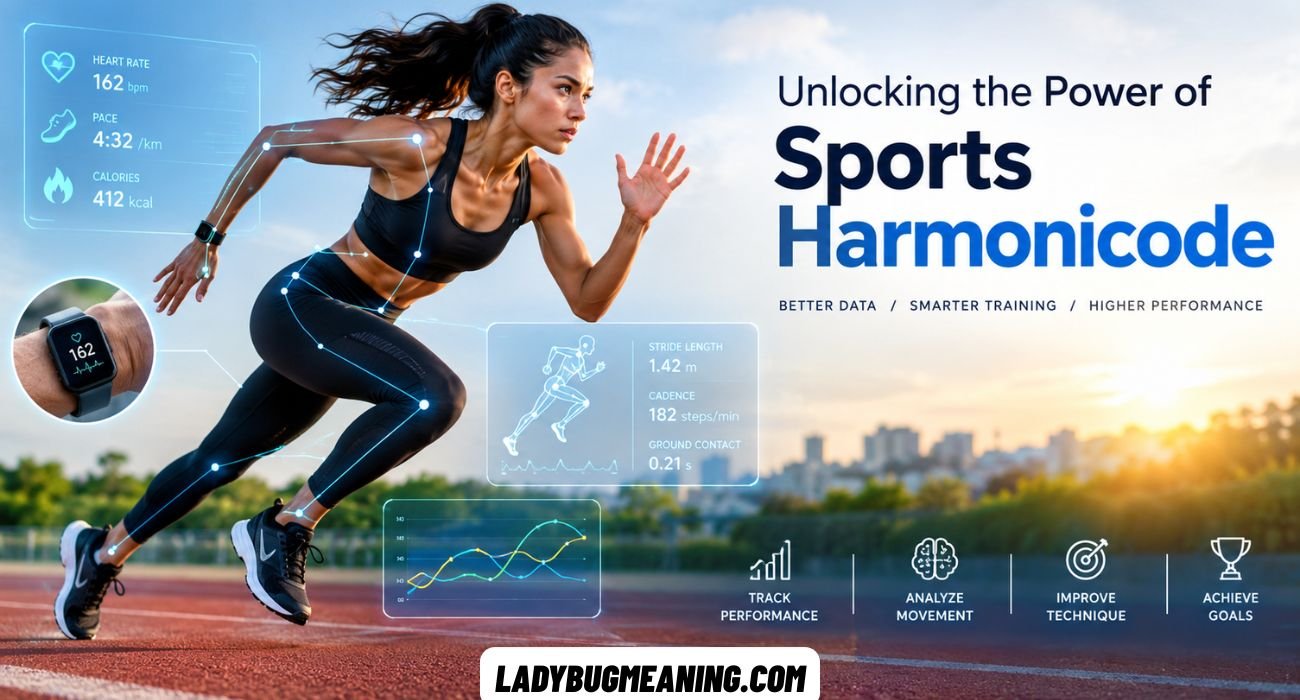
Unlocking the Power of Sports Harmonicode: A New Era in Athletic Performance
Harmonicode Sports is a term associated with the growing interest in movement patterns, sports technology, and data-driven athletic training. Athletes and coaches continually look for ways to improve speed, strength, coordination, endurance, and recovery. Modern technology can support these goals by turning physical activity into useful information that helps people understand their performance and identify areas for improvement.
The term Harmonicode Sports may refer to a particular online platform, branded concept, or approach to athletic performance. Its precise meaning depends on the source using the name. Although movement analysis and performance tracking are established parts of sports science, the name alone does not prove that a specific Harmonicode system uses these methods or produces measurable improvements.
This comprehensive guide explores what Harmonicode Sports may represent, how related training technologies work, the potential benefits and limitations, and how athletes can evaluate claims before adopting a new service. It also explains the role of scientific evidence, data privacy, coaching expertise, and practical training methods in achieving sustainable athletic progress.
Read also: PO Box 42346 Indianapolis IN
Sports Harmonicode Profile Biography Table
The following table provides a general overview of the topic. It is not a verified biography of an individual or a confirmed technical specification for a particular product.
| Profile detail | Information |
|---|---|
| Name | Harmonicode Sports |
| Topic category | Sports performance and training |
| General subject | Athletic movement, performance analysis, and training optimization |
| Potential audience | Athletes, coaches, personal trainers, and sports enthusiasts |
| Related scientific fields | Sports science, biomechanics, exercise physiology, and motor learning |
| Potentially relevant technologies | Motion tracking, wearable sensors, video analysis, and performance dashboards |
| Possible applications | Technique assessment, progress monitoring, and training feedback |
| Main objective | Understanding and potentially improving athletic performance |
| Official developer | Not independently established here |
| Verified equipment | No specific equipment confirmed |
| Scientific validation | Must be assessed for the specific product or methodology |
| Recommended approach | Verify claims and combine appropriate technology with evidence-based coaching |
This profile separates the general subject from facts that would require confirmation. Readers should not assume that Harmonicode Sports is a standardized scientific discipline, officially recognized training system, or established technology provider without supporting documentation.
What Is Sports Harmonicode?
Sports Harmonicode is a term that may be associated with the use of coordinated movement, recurring patterns, and performance information to understand athletic activity. However, the name does not have a universally established scientific definition that can be assumed to apply to every website, product, or service using it.
In sports science, athletes produce complex movements through the interaction of muscles, joints, the nervous system, physical conditioning, and environmental demands. Researchers and coaches examine these interactions to understand why certain movements are efficient, how technique changes under fatigue, and which training methods support specific performance goals.
For example, a sprinter depends on acceleration, force production, stride mechanics, and coordination. A basketball player requires jumping ability, balance, quick reactions, and controlled changes of direction. A swimmer relies on stroke mechanics, timing, body position, and aerobic conditioning. Each sport creates different demands, so an effective training system must account for the activity rather than apply one universal formula.
A platform using the Harmonicode Sports name might discuss some of these ideas. Nevertheless, its actual purpose, methods, and technical capabilities should be confirmed through official documentation. It would be inaccurate to attribute artificial intelligence, proprietary algorithms, special sensors, or scientifically proven results to the name without evidence.
The Connection Between Movement Patterns and Athletic Performance
Human movement contains patterns that can be observed and measured. A runner repeats a sequence of strides, a tennis player follows a serving motion, and a weightlifter coordinates several joints to move a load safely. Coaches study these actions to identify consistent techniques and possible areas for improvement.
Movement patterns do not need to look identical for every athlete. Differences in body proportions, training history, mobility, and competitive goals can affect how a person performs a task. A technique that works well for one athlete may not suit another.
The purpose of movement analysis is therefore not always to make every athlete move in the same way. Instead, it is to determine whether a movement supports the required task, meets relevant technical standards, and allows the athlete to perform effectively without unnecessary risk.
Why Is Harmonicode Sports Gaining Attention?
Interest in sports technology has grown alongside the availability of affordable wearable devices, smartphone video, digital coaching platforms, and performance dashboards. These tools allow athletes to collect information that previously required more specialized equipment or facilities.
People searching for Harmonicode Sports may be looking for a new training approach, a sports technology platform, or an explanation of a concept they have encountered online. They may also want to know whether the approach offers practical advantages over traditional coaching.
The most useful way to assess the subject is to distinguish the broader trend toward data-supported training from specific claims about a branded system. Technology can help athletes make informed decisions, but its value depends on the accuracy of the measurements, the quality of the interpretation, and the actions taken afterward.
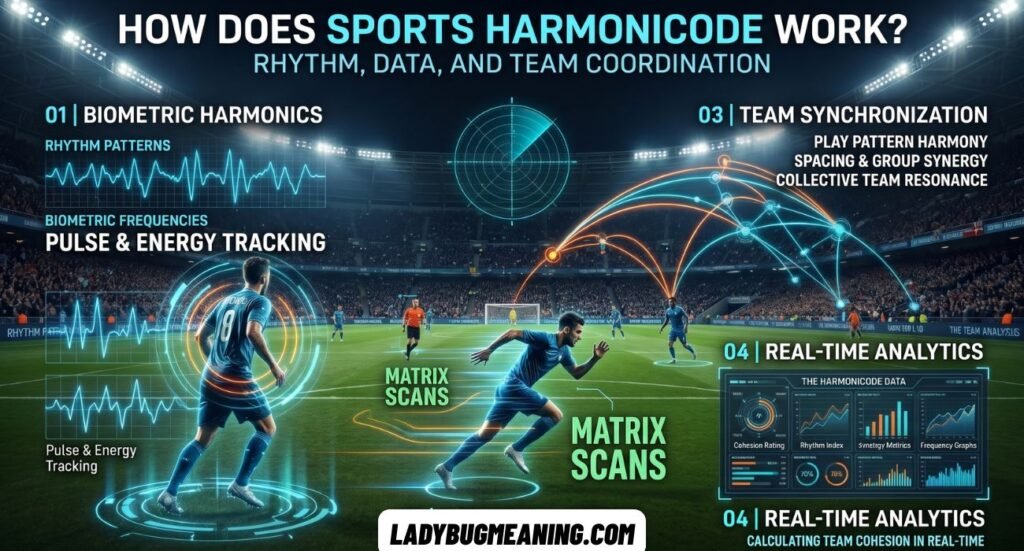
How Does Sports Harmonicode Work?
The precise operating process of a specific Harmonicode Sports system cannot be established from the name alone. However, established sports performance systems commonly follow a cycle of observation, measurement, analysis, feedback, and reassessment.
This process begins with a clear performance goal. A coach may want to improve a runner’s acceleration, increase a volleyball player’s vertical jump, or understand why a cyclist’s power output declines during long sessions. The coach then selects appropriate measurements and compares the results over time.
A general performance-analysis process includes the following stages.
1. Establish a Baseline
Before changing a training plan, an athlete needs a starting point. Baseline measurements may include sprint times, jump height, repetition counts, distance covered, heart rate, or other indicators relevant to the sport.
For example, a runner might complete several timed short sprints under consistent conditions. Recording the results creates a reference for later sessions. Without a baseline, an athlete may struggle to distinguish real progress from normal variation caused by fatigue, weather, motivation, or measurement error.
2. Collect Relevant Performance Data
The next step is collecting information that relates directly to the training objective. Depending on the sport and available resources, this may involve video recordings, timing gates, wearable sensors, heart-rate monitors, force plates, or manually recorded results.
More data does not automatically produce better decisions. A simple stopwatch may be sufficient for some training goals, while a specialist biomechanics assessment may be useful for a more complex movement question.
A good measurement system should explain what it measures, how accurately it measures it, and what limitations apply to the results.
3. Identify Patterns and Changes
Coaches compare observations to identify meaningful changes. A sprinter may show improved acceleration, while a weightlifter may demonstrate more consistent technique across repetitions. A basketball player may improve landing control during a specific drill.
These observations need context. A slower sprint time could reflect fatigue rather than declining fitness. A change in joint movement might result from camera positioning rather than a genuine technical difference.
For this reason, performance data should support professional judgment rather than replace it.
4. Adjust the Training Plan
Once the coach identifies an area for improvement, the training program can be adjusted. Changes might include modifying exercise selection, training volume, rest periods, technical drills, or recovery practices.
For instance, if a runner struggles to maintain speed during repeated efforts, the coach may review conditioning, pacing, recovery intervals, and technique. The appropriate intervention depends on the athlete’s experience, health, goals, and the evidence available.
5. Monitor Results and Repeat the Process
Training adjustments should be evaluated over time. Coaches can repeat the original tests under similar conditions and determine whether the intervention produced a meaningful change.
A single improvement does not necessarily establish that a training method caused the result. Reliable evaluation requires consistent testing, enough observations, and consideration of other factors that may affect performance.
This cycle provides a practical framework for understanding data-driven athletic development, regardless of whether a particular system uses the Harmonicode name.
Key Benefits of Sports Harmonicode for Athletes
The benefits associated with a sports performance concept depend on the methods and tools it actually uses. If a Harmonicode-branded service incorporates established performance-analysis techniques, its potential value would need to be evaluated in relation to those techniques rather than inferred from its name.
The following are benefits that well-designed sports performance systems can offer.
Better Awareness of Athletic Technique
Video recordings and motion-analysis tools can help athletes see details that are difficult to notice during exercise. A runner may observe changes in posture, while a tennis player may examine the sequence of movements during a serve.
This feedback can make coaching discussions more specific. Instead of receiving only a general instruction to improve technique, an athlete can review a particular movement and work on a clearly defined adjustment.
However, visible differences are not always evidence of better performance. A coach should interpret movement in the context of the sport, the athlete’s physical characteristics, and the intended outcome.
More Measurable Training Progress
Performance tracking gives athletes a way to evaluate changes over time. Measurements such as sprint time, lifting performance, running distance, or jump height can provide useful feedback when collected consistently.
For example, a basketball player who wants to improve jumping ability might record jump performance at regular intervals. The athlete can then compare results alongside training volume, recovery, and strength development.
Progress measurements can also reveal plateaus. If results remain unchanged for several weeks, a coach may review the program rather than continuing the same approach without assessment.
More Individualized Training
Athletes differ in their experience, physical capabilities, recovery needs, and competitive demands. Performance data can help coaches adapt training to those differences.
A beginner may need to develop basic movement skills and general conditioning, while an experienced competitor may require more specialized work. A recreational runner preparing for a first race also has different needs from a sprinter preparing for competition.
Individualization should combine measurements with coaching knowledge, athlete feedback, and appropriate medical guidance when necessary.
Improved Communication Between Athletes and Coaches
Shared performance records can make coaching conversations clearer. Both parties can review the same measurements, discuss changes, and agree on the next training priorities.
This approach can help athletes understand why a coach recommends a particular adjustment. It may also encourage more consistent training because the goals and evaluation criteria are clearly defined.
Nevertheless, numbers should not dominate every conversation. Motivation, confidence, perceived effort, sleep quality, and personal circumstances also influence athletic development.
More Informed Recovery Decisions
Performance monitoring can help coaches recognize changes in workload and performance that deserve attention. A sudden decline in output, persistent fatigue, or unusual discomfort may justify reviewing the training plan.
No single wearable metric can reliably diagnose overtraining, predict every injury, or determine whether an athlete is medically fit to compete. Recovery decisions should consider multiple indicators, the athlete’s reported symptoms, and professional assessment where appropriate.
Potential Limitations of These Benefits
Technology-assisted training can be useful, but the results depend on how the tools are selected and applied.
| Potential benefit | What supports it | Important limitation |
|---|---|---|
| Technique feedback | Suitable video or movement measurements | A measurement may not explain why a movement occurs |
| Progress tracking | Consistent testing with reliable equipment | Normal variation can affect results |
| Individualized training | Relevant data combined with coaching | Data alone cannot account for every individual factor |
| Recovery monitoring | Workload records and athlete feedback | Wearables cannot diagnose medical conditions |
| Coaching communication | Shared records and clear goals | Excessive monitoring may distract from training |
| Performance improvement | Appropriate interventions and reassessment | Improvement is not guaranteed by using technology |
The central lesson is that measurement creates opportunities for better decisions, not automatic improvements in athletic performance.
The Science Behind Sports Harmonicode
Understanding the science behind Harmonicode Sports requires separating established sports science from claims about a specific branded approach. Biomechanics, exercise physiology, motor learning, and performance measurement provide established foundations for studying athletic development. Whether a particular Harmonicode system applies these disciplines effectively requires evidence about its actual methods.
Biomechanics and Human Movement
Biomechanics examines how forces affect the human body and how people move. It helps researchers and coaches investigate running mechanics, jumping, throwing, lifting, balance, and other athletic actions.
For example, a long jumper must generate horizontal speed, coordinate takeoff, and control body position during flight and landing. Coaches can use video analysis and other measurements to investigate different parts of the movement. The resulting information may guide technical practice.
However, biomechanics is not simply about making movements look smooth. The correct technique depends on the activity, individual anatomy, physical demands, and performance objective. A measurement must answer a useful question before it can support a training decision.
Exercise Physiology and Physical Adaptation
Exercise physiology examines how the body responds to physical activity and adapts to training. It covers areas such as cardiovascular fitness, muscular strength, energy use, fatigue, and recovery.
Training adaptations develop through an interaction between exercise intensity, training volume, rest, nutrition, and individual characteristics. A performance platform may help record some of these variables, but recording them does not itself create physiological improvement.
For instance, a cyclist may track power output during training. The measurements can help quantify effort and compare sessions, while the training plan determines how that information informs exercise intensity and recovery.
Motor Learning and Feedback
Motor learning concerns how people develop and refine movement skills through practice and feedback. Athletes often improve by repeating a skill, receiving useful guidance, and adjusting their technique.
Video replay, coaching instructions, and selected performance measurements can support this process. Yet constant feedback is not always beneficial. Athletes also need opportunities to perform independently, adapt to changing conditions, and develop confidence in their movement.
The most effective feedback depends on the skill, the athlete’s experience, and the purpose of the exercise.
Data Analysis and Artificial Intelligence
Some modern sports platforms use algorithms to process video, detect movement patterns, or summarize performance measurements. Artificial intelligence may help automate certain tasks, but its accuracy depends on the data, model design, and testing conditions.
A system that estimates joint angles from video, for example, may be affected by camera placement, lighting, clothing, movement speed, and whether important body parts remain visible.
It is important not to assume that Harmonicode Sports uses artificial intelligence or any particular analytical method without technical documentation confirming those features.
What Would Scientific Validation Require?
A credible evaluation of a specific Harmonicode Sports product would examine several questions:
- Does the system measure what it claims to measure?
- Have researchers tested its accuracy against an appropriate reference method?
- Can different users obtain reasonably consistent results under similar conditions?
- Does using the system improve relevant outcomes compared with an appropriate alternative?
- Have independent researchers replicated the findings?
- Are the limitations, costs, and potential conflicts of interest clearly disclosed?
A product may accurately measure movement without improving athletic performance. Likewise, a training program may improve results without proving that its branded technology is responsible for those improvements.
These distinctions are essential when evaluating claims about new sports technology.
Real-World Applications of Sports Harmonicode
Although the specific applications of Harmonicode Sports require confirmation, established performance-analysis methods are used across many sports. The usefulness of a particular tool depends on the questions athletes and coaches need to answer.
Running and Sprinting
Runners can use timing equipment, wearable sensors, and video recordings to assess speed, pacing, and running mechanics. Sprinters may focus on acceleration and maintaining speed, while distance runners may monitor pace, training volume, and endurance.
A runner who experiences inconsistent performance might compare results across several sessions. The coach can then consider fatigue, terrain, training intensity, and technique before changing the program.
Football and Soccer
Football and soccer involve repeated acceleration, deceleration, sprinting, jumping, and changes of direction. Depending on the level of competition, teams may use tracking technology and video analysis to study player movement and workload.
Such information can help coaches understand how training demands vary between positions and sessions. However, performance tracking should respect athlete privacy and should not replace medical evaluation when an athlete experiences pain or unusual fatigue.
Basketball
Basketball players need speed, agility, jumping ability, coordination, and decision-making under pressure. Coaches may assess jump performance, shooting consistency, movement during drills, and changes of direction.
A player working to improve jumping ability could combine strength training with appropriate jump testing. Tracking results may help evaluate progress, but adequate recovery and sound training technique remain important.
Tennis and Other Racket Sports
Racket sports require coordination, reaction time, footwork, and precise movement sequences. Video analysis can help a coach examine serving technique, body positioning, and stroke mechanics.
A tennis player might use recordings to compare serves before and after a period of technical practice. The coach should consider not only how the movement looks but also serving accuracy, speed, consistency, and comfort.
Swimming
Swimming performance depends on propulsion, body position, stroke coordination, pacing, and conditioning. Coaches may use video footage, split times, stroke counts, and other measurements to evaluate training.
A swimmer who slows during a race might need to examine pacing, fatigue, technique, or conditioning. No single measurement necessarily explains the result, so several sources of information may be needed.
Strength Training and Weightlifting
Strength athletes can track loads, repetitions, movement consistency, and changes in lifting performance. Video analysis may also help coaches review technique during selected exercises.
These measurements can help establish training progress and reveal when a program needs adjustment. They cannot guarantee injury prevention, and athletes should prioritize appropriate technique, suitable loading, and qualified instruction.
Devices and Tools Used in Sports Harmonicode
No particular device can be confirmed as an official Harmonicode Sports tool from the information available here. Nevertheless, the following technologies illustrate the equipment commonly used in sports performance analysis.
Wearables can record information such as heart rate, activity duration, movement, and estimated training load. The exact features depend on the device. Estimates may be less accurate during certain activities, and measurements should be interpreted in context.
Video and motion-analysis systems
Video can help coaches examine movement sequences, posture, and technique. Specialized systems may estimate body positions or joint movement, but camera setup and measurement accuracy affect the results.
Force plates and timing equipment
Force plates measure forces during activities such as jumping and landing. Timing gates measure elapsed time between points. These tools can provide more objective information for specific tests when used and interpreted correctly.
Performance-analysis software
Software can organize training records, compare sessions, visualize trends, and generate reports. Its usefulness depends on data quality, clear measurement definitions, and whether the results help answer practical coaching questions.
How to Choose the Right Equipment
Athletes do not always need expensive technology. A beginner may benefit more from a reliable training log, a stopwatch, and regular coaching than from a complicated performance dashboard.
Before buying equipment, identify the problem you want to solve. If the goal is to improve sprint times, reliable timing may be sufficient. If the goal is to investigate a complex technical movement, a suitable video-analysis setup may offer more useful information.
Also compare purchase prices, subscription charges, maintenance requirements, device compatibility, data export options, and privacy policies. A product that collects large amounts of information may still be unsuitable if the measurements are unreliable or difficult to interpret.
Who Can Benefit from Sports Harmonicode?
The potential usefulness of a sports performance approach depends on the athlete’s goals, experience, resources, and access to qualified guidance.
Beginner Athletes
Beginners can use simple measurements to establish consistent habits and understand basic progress. Recording exercise sessions, running times, or completed repetitions may help them recognize improvement.
However, beginners should avoid chasing complicated metrics before developing sound technique and a manageable training routine. Excessive monitoring may create unnecessary pressure or distract from learning basic skills.
Experienced and Competitive Athletes
Competitive athletes may benefit from more detailed performance assessment when it addresses a specific need. A coach might monitor sprint performance, jump characteristics, training workload, or technical consistency.
Advanced tools can be useful when their measurements are reliable and their results influence actual training decisions. The presence of sophisticated technology alone does not make a training program effective.
Coaches and Personal Trainers
Coaches can use performance information to set goals, compare training sessions, and communicate adjustments. A well-organized record may also help several coaches coordinate an athlete’s preparation.
Still, coaches need to understand measurement limitations. An automated report should not override direct observation, athlete feedback, or appropriate medical advice.
Recreational Sports Enthusiasts
People who exercise for enjoyment, general fitness, or local competition can benefit from straightforward progress tracking. Recording consistency, workout duration, and personal milestones may be enough to maintain motivation.
They do not necessarily need specialized software or professional laboratory testing. The best solution is one that fits their goals, budget, experience, and preferred way of exercising.
Who Should Be Cautious?
Athletes recovering from injuries, people experiencing unexplained symptoms, and individuals with medical conditions affecting exercise should seek appropriate professional guidance before making significant training changes.
Performance data cannot diagnose injuries or establish medical clearance. Similarly, athletes should not continue a painful exercise simply because a dashboard reports acceptable performance.
Read more: Teckaya Construction Equipment Ltd Management – Company Profile, Address & Contact Guide
Sports Teams and Organizations Using It
There is not enough independently verified information here to identify specific professional teams, national sports organizations, or universities as confirmed users of Harmonicode Sports. Naming organizations without reliable evidence could mislead readers.
However, professional and amateur sports organizations commonly use performance-analysis methods, including video review, workload monitoring, and physical testing. Their equipment and procedures vary according to budget, sport, competition level, and staffing.
How Teams Evaluate Performance Technology
A sports organization typically needs to establish whether a tool addresses a real coaching or operational problem. A club might want to improve training consistency, while a professional team may need to monitor workload across a large squad.
The organization should evaluate measurement quality, staff training requirements, data security, athlete consent, and the time required to interpret reports. It should also compare the tool with existing methods to determine whether it adds enough value to justify its cost.
Before accepting a claim that a team uses Harmonicode Sports, look for confirmation from the organization itself, an official partnership announcement, or credible reporting that clearly identifies the product and its role.
Is Harmonicode Sports Scientifically Validated?
The scientific validity of Harmonicode Sports cannot be established solely from the name or general descriptions of sports technology. Validation must relate to a clearly identified product, method, measurement, or training intervention.
For example, a wearable device may be validated for measuring heart rate during particular activities. That evidence does not automatically establish its accuracy for estimating calories burned, assessing fatigue, or predicting injuries.
Likewise, a motion-analysis tool may measure movement consistently without demonstrating that its recommendations improve athletic performance. Different claims require different types of evidence.
What Evidence Should You Look For?
Start with the developer’s technical documentation and any published research associated with the exact product. Check whether the studies identify the equipment, testing conditions, participant characteristics, and outcomes.
Independent research is especially useful because it can help determine whether the results hold beyond the developer’s own testing environment. Studies should be relevant to the claim being made, and their limitations should be considered.
| Type of evidence | What it can establish | What it does not establish by itself |
|---|---|---|
| Product description | Intended features and use | Accuracy or effectiveness |
| Laboratory accuracy testing | Performance under tested conditions | Real-world athletic improvement |
| Reliability testing | Consistency of measurements | Whether the measurements are useful |
| Controlled intervention study | Effects under specified conditions | Guaranteed results for every athlete |
| Independent replication | Whether findings hold across investigations | Universal effectiveness across all sports |
Warning Signs of Unsupported Claims
Be cautious if a provider promises guaranteed performance gains, claims to prevent every injury, or describes its technology as scientifically proven without identifying relevant evidence.
Other warning signs include missing developer information, vague explanations of how measurements work, undisclosed fees, exaggerated testimonials, and a lack of clear privacy terms.
These concerns do not automatically prove that a service is ineffective. They indicate that more verification is needed before relying on its claims or spending money.
Limitations and Challenges of Sports Harmonicode
Even a well-designed sports performance system can have limitations. Understanding these issues helps athletes avoid unrealistic expectations and make better decisions.
Measurement Errors
Devices can produce inaccurate or inconsistent results because of poor calibration, sensor placement, environmental conditions, or limitations in the measurement method.
For example, a wrist-based device may not record every movement equally well during different exercises. A camera-based system may struggle when athletes overlap in the frame or move outside the camera’s field of view.
Users should understand the expected accuracy and follow the manufacturer’s testing and setup instructions.
Misinterpreting Data
A measurement shows only part of the picture. A lower training output might indicate fatigue, poor sleep, a change in conditions, or a measurement problem. It does not automatically reveal the cause.
Athletes and coaches should interpret data alongside training history, subjective feedback, and direct observation. Where necessary, qualified professionals can help investigate persistent or unexplained changes.
Cost and Accessibility
Specialized performance equipment can be expensive. Some systems also require recurring subscriptions, staff training, software updates, or ongoing maintenance.
These costs may be reasonable for an organization with a clear use case, but they may not be justified for a recreational athlete. A simpler tool may answer the same question at a much lower cost.
Privacy and Data Security
Sports technology may collect sensitive information about an athlete’s location, activity, physical performance, or daily routines. Organizations should understand how data is stored, who can access it, and whether it is shared with third parties.
Before using a platform, review its privacy policy, account permissions, retention practices, and options for deleting or exporting data. Teams should also establish clear policies for athlete consent and access to individual performance records.
Overdependence on Technology
Athletes can become too focused on scores and dashboards. This may distract them from developing skills, enjoying the sport, or listening to their bodies.
Technology should support training rather than become the only measure of success. Coaching judgment, practical experience, recovery, and personal well-being remain important parts of athletic development.
How to Get Started With Sports Harmonicode
If you are interested in Harmonicode Sports, start by identifying the exact website, product, or method associated with the name. This is important because a general topic description does not confirm the existence or features of a particular platform.
Once you have identified the service, use the following steps to evaluate whether it meets your needs.
Step 1: Verify the Provider
Look for an official website, identifiable developer, clear contact details, and documentation explaining the service. Confirm that the website describes the same product you intend to use.
Check for independent reviews and credible reporting where available. Do not rely exclusively on promotional material when making decisions about expensive equipment or long-term subscriptions.
Step 2: Define a Specific Training Goal
Choose one measurable objective before selecting a tool. Examples include improving a sprint time, increasing strength, developing more consistent technique, or tracking training workload.
A clear goal makes it easier to determine whether a product provides useful information. Without one, it can be tempting to collect measurements that do not influence any meaningful decision.
Step 3: Choose an Appropriate Measurement
Select the simplest reliable method that addresses your goal. A stopwatch may suit a basic speed test, while video analysis may help with technique assessment.
If the proposed Harmonicode service requires specialized equipment, confirm that the equipment is compatible, the measurements are explained, and the expected results match your objective.
Step 4: Establish a Baseline
Record your starting performance under consistent conditions. Use the same test procedure when possible, and document relevant factors such as training volume, rest, and environmental conditions.
A baseline gives you something meaningful to compare with future results. It also helps reduce the risk of mistaking ordinary fluctuations for lasting improvement.
Step 5: Follow a Structured Training Plan
Use the information to support an appropriate training program. Progress gradually, allow sufficient recovery, and adapt exercises to your experience and goals.
If you are new to the sport or uncertain about technique, seek guidance from a qualified coach. Avoid making major training changes based solely on automated recommendations.
Step 6: Review Results Regularly
Repeat relevant measurements at planned intervals rather than reacting to every daily change. Look for consistent trends and consider whether the changes matter for your sport.
If performance declines or pain develops, investigate the cause instead of assuming that more training or additional technology will solve the problem.
Step 7: Evaluate the Cost and Value
Compare the product’s total cost with the practical benefit it offers. Consider the equipment, subscriptions, setup time, training requirements, and data management responsibilities.
Continue using the service only if it provides reliable, relevant information that supports better decisions. If it adds complexity without improving your training process, a simpler alternative may be more appropriate.
Harmonicode Sports vs. Traditional Athletic Training
Harmonicode Sports cannot be compared as a verified, standardized system without more information about its actual features. However, data-assisted training and traditional coaching can be compared as general approaches.
| Factor | Data-assisted training | Traditional coaching |
|---|---|---|
| Feedback | May include numerical measurements and recordings | Often relies on observation, instructions, and practical testing |
| Progress tracking | Can automate records and trend analysis | Can use training logs and periodic assessments |
| Personalization | Depends on data quality and interpretation | Depends on the coach’s expertise and knowledge of the athlete |
| Cost | May require devices or subscriptions | Varies with coaching arrangements and facilities |
| Main limitation | Data can be inaccurate or misinterpreted | Observations can be subjective or inconsistent |
| Best use | Measuring specific outcomes and identifying trends | Developing skills, making adjustments, and providing context |
These approaches do not need to compete. A coach can combine practical instruction with carefully selected measurements to create a more complete view of an athlete’s development.
See also: Thigh Twitching Superstition & Spiritual Meaning
The Future of Harmonicode Sports in Athletic Training
The future of Harmonicode Sports specifically depends on what the name represents and whether its associated products or methods demonstrate practical value. More broadly, sports performance technology continues to explore ways to measure movement, organize training data, and provide feedback to athletes and coaches.
More Accessible Performance Analysis
Smartphones, consumer wearables, and digital coaching services have made some forms of performance tracking easier to access. Athletes may be able to review training records or basic movement information without visiting a specialized laboratory.
However, accessibility does not guarantee accuracy. Users still need to understand what a device measures and whether it is suitable for their sport.
Artificial Intelligence and Automated Feedback
AI-assisted tools may help process large amounts of video and sensor data, identify patterns, and summarize results. In the future, these capabilities may support faster feedback and more individualized coaching workflows.
Their value will depend on appropriate validation, transparent limitations, and evidence that the information improves decisions. Automated feedback should not be treated as an unquestionable authority.
Greater Focus on Recovery and Workload
Sports organizations increasingly have reasons to examine how training demands relate to performance and recovery. Better data management may help coaches identify workload changes and plan training more carefully.
Still, recovery is influenced by many factors, including sleep, nutrition, stress, health, and individual differences. No single score can fully represent an athlete’s readiness.
Responsible and Athlete-Centered Technology
Future sports platforms will need to balance useful measurement with privacy, fairness, and ease of use. Athletes should understand what information is collected, why it is needed, and who can access it.
Systems that provide clear explanations, meaningful evidence, and practical recommendations are easier to evaluate than products that rely on impressive terminology alone.
Ultimately, the most useful sports technology will be the technology that helps people make better decisions while keeping training safe, understandable, and focused on real performance goals.
FAQs About Harmonicode Sports
1. What is Harmonicode Sports?
Harmonicode Sports is a term associated with athletic performance, movement patterns, and sports technology. Its exact meaning and features depend on the specific website, product, or methodology using the name.
2. Is Harmonicode Sports a real sports training technology?
The name alone does not establish that it represents a verified technology or standardized training system. Check the provider’s official documentation and independent evidence before treating it as an established product.
3. How does Harmonicode Sports improve athletic performance?
Its specific effects have not been established here. Established performance-analysis methods can support improvement by measuring movement, tracking progress, and helping coaches adjust training based on reliable information.
4. What are the main benefits of Harmonicode Sports?
Potential benefits depend on the actual system. Sports performance tools can support technique analysis, progress tracking, individualized coaching, and training evaluation, but these benefits should not automatically be attributed to Harmonicode Sports.
5. Does Harmonicode Sports use artificial intelligence?
There is insufficient verified information to confirm that every service using this name employs AI. Some sports technologies use AI to analyze video or movement data, but users should check the specific provider’s technical documentation.
6. Is Harmonicode Sports scientifically proven?
Its scientific validation has not been established here. Look for independent research that evaluates the exact system, verifies measurement accuracy, and tests whether it produces meaningful improvements in athletic performance.
7. Which athletes can benefit from Harmonicode Sports?
Athletes, coaches, trainers, and recreational sports enthusiasts may benefit from suitable performance-analysis tools. The appropriate approach depends on individual goals, experience, budget, and the reliability of the technology.
8. What equipment is required for Harmonicode Sports?
No official equipment requirements have been verified. Related sports-analysis methods may use wearable trackers, cameras, timing gates, force plates, or software, depending on the training objective.
9. Can Harmonicode Sports help prevent sports injuries?
No injury-prevention benefit can be confirmed for Harmonicode Sports specifically. Appropriate training, workload management, recovery, and qualified medical guidance can support safer participation, but no technology can eliminate injury risk.
10. Is Harmonicode Sports suitable for beginners?
Beginners can benefit from basic performance tracking and qualified coaching. Before adopting a Harmonicode-branded service, verify its purpose, cost, ease of use, and suitability for your experience level.
11. How can I get started with Harmonicode Sports?
First, identify the exact service and verify its provider. Then establish a measurable training goal, check the reliability of its tools, record your baseline performance, and assess whether its recommendations provide practical value.
12. Is Harmonicode Sports better than traditional coaching?
There is no verified evidence here to establish that it is superior to traditional coaching. Performance technology and coaching can complement each other when reliable measurements support sound training decisions.
Conclusion
Harmonicode Sports reflects an area of interest in athletic performance, movement analysis, and technology-assisted training. Established sports science offers useful methods for measuring progress, refining technique, and evaluating training programs. However, the exact identity, features, and effectiveness of a Harmonicode-branded system require verification. Athletes should distinguish established scientific principles from promotional claims and focus on reliable evidence when choosing training tools.
Before investing in Harmonicode Sports, confirm the provider’s identity, examine available research, review data privacy practices, and compare costs with practical benefits. Choose tools that support clear goals and work alongside qualified coaching, structured exercise, and appropriate recovery. Ultimately, consistent training, informed decisions, and meaningful performance measurements matter more than the name or complexity of any sports technology.