

Why PedroVazPaulo Business Consultant? Real Results From 10+ Years of Experience
Businesses often face difficult decisions when they want to increase revenue, improve daily operations, adopt new technology, or enter new markets. A business consultant can help leaders understand these challenges, evaluate available options, and create a practical plan for sustainable growth. The PedroVazPaulo Business Consultant search relates to a consulting name associated with business strategy, management support, and organizational improvement.
Choosing a consultant requires more than reading a list of services. Business owners should understand the consulting approach, the industries served, the implementation process, the expected costs, and the evidence behind any performance claims. These details help them decide whether a consulting engagement offers meaningful value.
This guide explores business consulting methods, strategic planning, operational efficiency, digital integration, leadership development, and performance measurement in the context of PedroVazPaulo. It also explains how prospective clients can evaluate consulting claims and measure results without relying on unverified promises. Any specific experience, client outcomes, or performance statistics should be confirmed through reliable documentation before being treated as established facts.
Read more: The Spiritual Meaning of Widow’s Peak
The Evolution of Business Consulting
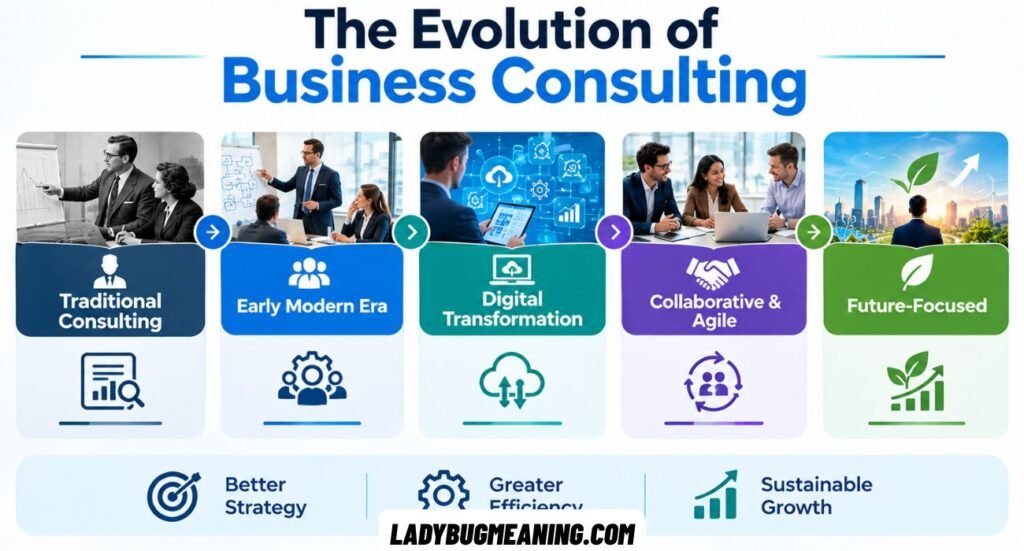
Business consulting has changed as companies have become more connected, competitive, and dependent on technology. In the past, many consulting engagements focused on reviewing financial statements, identifying operational problems, and recommending organizational changes. Modern consulting often combines these traditional activities with data analysis, digital systems, employee development, and ongoing performance reviews.
For a business owner, the main benefit of consulting is an outside perspective. An independent professional can examine existing processes, challenge assumptions, identify overlooked risks, and help management prioritize decisions. However, recommendations only create value when the business can implement them and measure their impact.
Traditional vs. Modern Approaches
Traditional consulting typically emphasizes expert analysis, management recommendations, and formal reports. A consultant might examine expenses, review departmental responsibilities, and recommend changes to improve profitability. This approach can work well when a company needs a clear diagnosis or an independent assessment.
Modern consulting often places greater emphasis on collaboration, technology, measurable objectives, and implementation support. Consultants may work with internal teams to develop performance dashboards, automate repetitive tasks, test new sales strategies, and monitor results over time.
| Area | Traditional consulting | Modern consulting |
|---|---|---|
| Primary focus | Analysis and recommendations | Analysis, implementation, and improvement |
| Decision-making | Expert-led | Collaborative and data-informed |
| Technology | Supporting role | Often integrated into the solution |
| Performance tracking | Periodic reports | Defined metrics and regular reviews |
| Employee involvement | Varies by engagement | Often includes training and change management |
| Adaptability | May follow a fixed project plan | Can adjust as results and conditions change |
Neither approach is automatically better. A company facing a regulatory problem may need a focused expert review, while a growing business with outdated systems may benefit from a broader transformation program.
PedroVazPaulo’s Consulting Approach and Potential Differentiators
When evaluating PedroVazPaulo Business Consultant, prospective clients should examine how the consulting service connects business strategy with practical execution. A useful engagement should begin with the company’s actual challenges rather than a standard package of recommendations.
For example, a business experiencing falling margins may need to examine supplier costs, pricing decisions, inventory levels, and customer retention before investing in additional marketing. A consultant who connects these factors can help management identify the underlying problem instead of treating each symptom separately.
Potential differentiators include customized planning, leadership support, operational analysis, technology recommendations, and continued performance monitoring. However, these features should be confirmed directly with the provider. The available information in this article does not independently establish specific breakthroughs, proprietary methods, or a verified record of more than ten years of experience.
Before hiring any consultant, ask for a professional background, a clear description of the methodology, relevant case studies, references where available, and an explanation of how success will be measured.
Understanding the Client Success Formula
A structured consulting engagement should follow a logical process. The consultant first identifies the problem, then develops a suitable solution, and finally supports implementation and evaluation. This process helps prevent businesses from spending money on recommendations that do not address their most important needs.
Assessment Framework
The assessment stage establishes a reliable picture of the business. Depending on the project, this may involve reviewing revenue, expenses, cash flow, sales conversion rates, customer feedback, employee responsibilities, and existing technology.
The consultant should distinguish symptoms from root causes. For instance, a company may believe it needs more sales leads because revenue has declined. An examination of its sales funnel might instead reveal that qualified leads are plentiful but too few prospects complete a purchase.
A useful assessment should produce a clear summary of the current situation, the most important challenges, available resources, and opportunities for improvement. It should also identify limitations in the data so that management does not make decisions based on misleading assumptions.
Solution Design
After the assessment, the consultant develops recommendations that match the company’s priorities, budget, and capabilities. A solution might involve revising pricing, simplifying approval procedures, improving customer follow-up, introducing new software, or clarifying management responsibilities.
Each recommendation should include an explanation of the problem it addresses, the expected benefit, the resources required, the potential risks, and a method for measuring progress. Management should also understand which actions require immediate attention and which can wait.
A small company, for example, may benefit more from improving customer retention and controlling expenses than from implementing an expensive enterprise software platform. The right solution depends on the company’s size, business model, and stage of development.
Implementation Strategy
Implementation turns a business plan into measurable action. Even a strong strategy can fail if employees do not understand their responsibilities, managers cannot allocate resources, or the company introduces too many changes at once.
A practical implementation plan defines milestones, responsible team members, deadlines, budgets, and performance indicators. It may also include staff training, pilot projects, and regular meetings to address problems before they become serious.
For example, a retailer introducing inventory management software could begin with one product category, compare the results with its previous process, and expand the system after resolving early issues. This phased approach reduces disruption and allows the company to learn before committing to a wider rollout.
Key Areas of Business Transformation
Business transformation involves improving the way an organization operates, competes, serves customers, and manages resources. A consultant should help the business identify which changes will create the greatest value instead of recommending every possible improvement at once.
Operational Efficiency
Operational efficiency means achieving better results with the resources a business already has. It involves reviewing workflows, reducing unnecessary expenses, improving communication, and making responsibilities easier to understand.
Common areas for improvement include duplicated administrative work, excessive inventory, slow approval processes, avoidable errors, and poorly coordinated departments. A consultant may map the current workflow, identify bottlenecks, and recommend simpler procedures.
Consider a distribution company that processes orders manually. Employees repeatedly enter the same information into different systems, creating delays and errors. Integrating order records and standardizing the workflow could reduce repeated work and free employees to focus on customer service.
Businesses should measure operational improvements through indicators such as processing time, cost per order, error rates, delivery performance, and employee workload. Reducing costs alone is not enough if the changes damage service quality or create unsustainable workloads.
Strategic Growth
Strategic growth requires a clear understanding of customers, competitors, market demand, and the company’s available resources. A business should identify where it can compete effectively before investing in expansion.
A consultant may help management evaluate new customer segments, improve pricing, strengthen marketing, develop new products, or enter additional markets. Each opportunity should be assessed against its potential return, implementation costs, risks, and alignment with the company’s long-term goals.
For example, a software company may want to increase sales by expanding into a new market. Before making a large investment, it could interview prospective customers, test a focused marketing campaign, and estimate the cost of acquiring each customer. The results would help management decide whether to expand, revise the offer, or pursue another opportunity.
Sustainable growth also requires sufficient working capital, reliable operations, and a capable management team. Increasing sales without preparing for higher expenses or greater demand can create cash-flow problems rather than lasting success.
Digital Integration
Digital integration connects the tools and information a company uses to run its operations. Depending on its needs, a business might connect customer relationship management software, accounting platforms, inventory systems, project management tools, and reporting dashboards.
The objective is to make information more accurate, accessible, and useful. When systems remain disconnected, employees may spend hours reconciling records, copying data, and correcting inconsistencies.
Before introducing new technology, businesses should review their existing systems and identify the precise problem they want to solve. They should also consider data security, employee training, software compatibility, ongoing subscription costs, and the difficulty of transferring existing information.
Technology should support a defined business objective. Buying software without changing the underlying process may simply make an inefficient workflow more expensive.
Results That Speak: By the Numbers
Business owners understandably want evidence that consulting services can deliver measurable improvements. However, the results of a consulting engagement depend on the company’s starting position, market conditions, implementation quality, available resources, and the time allowed for changes to take effect.
A credible performance review should distinguish documented results from projections, marketing claims, and illustrative examples.
Revenue Growth Statistics
Revenue growth can indicate progress, but it does not automatically demonstrate improved profitability. A company might increase sales by offering steep discounts while losing money on every additional order.
To evaluate business growth, management should consider revenue alongside gross profit margin, operating profit, customer acquisition cost, repeat purchase rates, and cash flow.
The following example illustrates how a business could evaluate a consulting project. These numbers are hypothetical and do not represent verified results from PedroVazPaulo clients.
| Performance indicator | Before | After |
|---|---|---|
| Monthly revenue | $100,000 | $115,000 |
| Gross profit margin | 30% | 32% |
| Monthly gross profit | $30,000 | $36,800 |
| Monthly operating expenses | $24,000 | $27,000 |
| Monthly operating profit | $6,000 | $9,800 |
In this example, monthly revenue rises by 15%, while operating profit rises from $6,000 to $9,800, an increase of approximately 63.3%. The example demonstrates why businesses should evaluate profitability as well as sales.
When reviewing a consultant’s claims, ask for the original baseline, measurement period, calculation method, and relevant business context. Confirm whether the improvement occurred after the recommended changes and whether other factors could have contributed.
Efficiency Improvements
Efficiency gains can be measured through several operational indicators. The appropriate measures depend on the problem a business wants to solve.
| Business objective | Useful metric | What it reveals |
|---|---|---|
| Reduce processing delays | Average cycle time | How long work takes to complete |
| Control operating costs | Cost per transaction | The expense associated with each completed activity |
| Improve product quality | Defect or error rate | How frequently problems occur |
| Strengthen customer service | Resolution time | How quickly customer issues are addressed |
| Improve stock management | Inventory turnover | How efficiently inventory moves through the business |
| Increase employee productivity | Output per labor hour | The amount of work completed relative to labor input |
A good consultant establishes a baseline before making changes, tracks performance consistently, and checks for unintended consequences. If processing time decreases but error rates rise, the overall change may not represent an improvement.
Specialized Industry Knowledge
Different industries face different operational demands, customer expectations, regulations, and competitive pressures. An approach that works for an online retailer may not suit a manufacturer or a professional services firm.
Industry knowledge helps a consultant ask better questions and identify realistic options. It should complement, rather than replace, an understanding of the individual business.
Sector-Specific Expertise
Businesses evaluating PedroVazPaulo Business Consultant should confirm which industries the provider actively serves and what experience is relevant to their situation. General business consulting may cover a range of sectors, but specialized projects can require deeper technical or regulatory knowledge.
For example, a retailer may need help with inventory turnover, customer retention, and online sales. A manufacturer may prioritize production scheduling, quality control, equipment utilization, and supplier reliability. A professional services company may focus on staff capacity, client acquisition, project profitability, and recurring revenue.
The following table outlines common consulting priorities across several business types.
| Business type | Potential consulting priorities |
|---|---|
| Startups | Business model validation, pricing, funding readiness, and market entry |
| Retail and e-commerce | Inventory control, conversion rates, customer retention, and fulfillment |
| Manufacturing | Production efficiency, quality assurance, and supply-chain management |
| Professional services | Utilization rates, project margins, client relationships, and capacity planning |
| Technology companies | Product strategy, customer onboarding, recurring revenue, and scalable systems |
| Established small and midsize businesses | Management systems, operational consistency, succession planning, and expansion |
These are examples of common industry needs, not a confirmed list of PedroVazPaulo’s specialized client sectors.
Customized Solutions
Customization means adapting recommendations to the company’s goals, budget, team, technology, and market conditions. It does not mean abandoning proven management practices or creating a completely new framework for every client.
A consultant should explain why a recommendation suits the business and what evidence supports it. The proposal should also acknowledge constraints, such as limited cash reserves, employee capacity, supplier dependence, or seasonal demand.
For a small business, a simple monthly reporting process may provide enough visibility to make better decisions. A larger company with multiple departments may need more advanced forecasting, integrated reporting, and formal governance.
The best solution is one the organization can realistically implement, maintain, and improve.
Read also: Seeing 2 Rabbits Spiritual Meaning
Client Collaboration Model
Consulting works best when the consultant and the client’s team share responsibility for the process. External expertise can identify problems and suggest solutions, but business leaders remain responsible for decisions, budgets, employees, and execution.
Partnership Approach
A partnership-based engagement begins with agreed goals and clear responsibilities. Management provides access to relevant information, identifies key stakeholders, and makes decisions within the agreed timeframe. The consultant supplies analysis, recommendations, implementation support, and an objective assessment of progress.
This collaboration helps prevent a common consulting problem: a detailed report that management appreciates but never uses.
A practical arrangement may include an initial assessment, weekly project meetings, monthly performance reviews, and a final evaluation. The frequency should match the project’s complexity and the pace of implementation.
Clients should also clarify confidentiality arrangements, data access, ownership of deliverables, intellectual property, and the conditions under which either party can end the engagement.
Communication Framework
Clear communication reduces confusion and helps the team address problems quickly. At the beginning of a project, both parties should agree on the primary contact, meeting schedule, reporting format, and process for escalating urgent issues.
Progress reports should explain what has been completed, what remains outstanding, which metrics have changed, and what decisions are needed. They should also identify delays or risks instead of presenting only positive developments.
When recommendations change, the consultant should explain the reason and the evidence behind the adjustment. This approach builds accountability and allows business leaders to make informed decisions.
Technology Integration Services
Technology consulting can help businesses choose, implement, and manage digital tools that support operational and strategic objectives. Its value depends on whether the technology solves a real problem and fits the organization’s capabilities.
Digital Transformation
Digital transformation is broader than buying software. It can involve redesigning customer experiences, changing internal workflows, improving access to business information, and helping employees adopt more effective ways of working.
A company might replace spreadsheet-based reporting with a centralized dashboard, introduce an online booking system, or connect its sales and accounting records. These changes can improve visibility and reduce manual work when implemented carefully.
A sound digital transformation project begins with a clear business case. The company should estimate implementation costs, recurring fees, training requirements, security risks, and expected benefits. It should also decide how to measure adoption and performance after launch.
Process Automation
Process automation uses software or technology to perform repetitive activities with limited manual intervention. Examples include invoice reminders, appointment confirmations, routine report generation, and automatic updates between compatible systems.
Automation is most useful when the underlying process is stable and well understood. Automating a poorly designed workflow can make errors happen faster and spread them across multiple systems.
Before introducing automation, businesses should identify the process owner, document exceptions, test the system, and establish human oversight for sensitive decisions. Financial transactions, customer data, and other critical activities may require additional access controls and approval procedures.
For example, an automated invoice reminder system can reduce the time employees spend contacting customers about overdue payments. However, staff should still review disputed invoices, unusual account activity, and cases that require personal communication.
Training and Development Programs
Business improvement depends on employees understanding new processes and having the skills to carry them out. Training and development can therefore be an important part of consulting, especially when a company changes its technology, structure, or growth strategy.
Leadership Development
Leadership development helps managers improve decision-making, delegation, communication, conflict resolution, and strategic thinking. These skills matter when a business grows beyond the point where its founder can personally oversee every task.
A useful leadership program should address actual workplace challenges. Managers might practice conducting performance conversations, setting priorities, managing organizational change, or responding to unexpected operational problems.
The results can be assessed through clearly defined objectives, employee feedback, completion of agreed development goals, and observable changes in management practices. Leadership training should not be judged only by attendance or participant satisfaction.
Team Capability Building
Team capability building focuses on helping employees perform their responsibilities effectively and work together across departments. Depending on the project, this may involve software training, process documentation, customer service skills, financial literacy, or project management.
Training should be connected to the work employees perform every day. Short demonstrations, supervised practice, written procedures, and follow-up sessions can help staff apply new knowledge more consistently.
Businesses should also create opportunities for employees to report difficulties with new processes. Frontline workers often recognize practical problems that managers and external consultants may overlook.
Quality Assurance Systems
Quality assurance helps businesses maintain consistent standards as they change their processes or expand their operations. It combines defined procedures, performance checks, corrective action, and regular review.
Performance Monitoring
Performance monitoring involves measuring whether a project is delivering the agreed results. At the beginning of an engagement, the consultant and client should establish key performance indicators, data sources, reporting intervals, and responsibility for reviewing the findings.
A balanced dashboard might include financial results, operational efficiency, customer satisfaction, employee adoption, and risk indicators. Too many metrics can make it difficult to identify what needs attention, so the company should prioritize indicators linked to its main objectives.
For example, a business implementing a new customer support system could track response time, resolution rates, repeat complaints, and customer satisfaction. Reviewing these measures together provides a more complete picture than focusing only on the number of tickets closed.
Continuous Improvement
Continuous improvement means reviewing results, learning from mistakes, and making incremental adjustments. A common method is the Plan-Do-Check-Act cycle.
- Plan: Identify a problem, establish a baseline, and define the proposed change.
- Do: Test the change on a manageable scale.
- Check: Compare the results with the baseline and expected outcome.
- Act: Adopt the improvement, revise the approach, or test another solution.
This method helps organizations avoid treating the original consulting plan as unchangeable. When evidence shows that a recommendation is not working, the team can adapt before investing more time and money.
Investment in Innovation
Innovation can help a business improve products, services, customer experiences, and internal processes. However, investment in new ideas should be balanced against financial capacity and the risks of disrupting existing operations.
Research Initiatives
Business research helps management understand customer needs, competitive conditions, and opportunities for improvement. Research methods may include customer interviews, surveys, market analysis, competitor comparisons, internal performance reviews, and small-scale experiments.
The research should address a specific decision. If a company is considering a new service, it might test customer interest, estimate delivery costs, and evaluate whether existing employees can support the additional work.
Businesses should distinguish reliable evidence from assumptions. A few positive customer comments may justify further testing, but they do not prove that a new offering will be profitable at scale.
New Methodologies
New methodologies can include improved forecasting, workflow redesign, structured experimentation, data visualization, and responsible use of artificial intelligence. Their suitability depends on the organization’s objectives, data quality, workforce skills, and risk tolerance.
Before adopting a new method, management should define the problem, compare alternatives, test the approach, and evaluate the results. A promising technology should not be implemented simply because it is popular.
Consultants should also explain the limitations of their recommendations. Forecasts are uncertain, automation can introduce new risks, and even carefully designed strategies may underperform when market conditions change.
See also: The Spiritual Meaning of a Dream About Fishing
How to Choose the Right Business Consultant
Before engaging PedroVazPaulo Business Consultant or another advisory provider, compare the service with your business needs and verify the information that matters to your decision.

Verify the Provider’s Identity and Experience
Search results may display different websites using similar versions of the Pedro Vaz Paulo name. One website’s claims should not automatically be attributed to another provider.
The website identifies itself as the official online home of the consulting and executive coaching practice and publishes information about its services and background. Its own statements are useful starting points, but they should not be treated as independent verification of performance claims.
Before sharing confidential information or paying for services, verify the exact domain, the consultant’s identity, contact details, written agreement, and payment recipient. If the provider’s identity remains unclear, pause the engagement until you can resolve the discrepancy.
Evaluate Case Studies and Client Results
Ask the consultant to provide case studies relevant to your company size, industry, and business challenge. Strong evidence explains the initial problem, the work performed, the measurement period, and the results achieved.
Where appropriate, ask for client references and permission to verify the outcomes independently. A testimonial or percentage improvement published on a provider’s website is not the same as an independently audited result.
Be particularly cautious of guarantees of doubled profits, guaranteed revenue growth, or unusually large improvements without a clear explanation of the conditions required.
Understand the Fees and Expected Return
Consulting fees may be structured as fixed project fees, hourly charges, monthly retainers, or milestone-based payments. The right arrangement depends on the scope of work and the level of support required.
Before signing an agreement, request a written breakdown of deliverables, project milestones, payment terms, exclusions, and any additional expenses. Clarify whether implementation support and employee training are included or billed separately.
To assess value, compare the total cost of the engagement with realistic potential benefits. Consider not only additional revenue but also cost savings, implementation expenses, employee time, ongoing software costs, and the risk that the expected improvements may not materialize.
When Business Consulting May Not Be the Right Choice
Consulting is not always the first or best investment. A business with an immediate cash shortage may need to stabilize its finances before funding a broad transformation project. A company facing a specific legal, tax, cybersecurity, or regulatory issue may need a qualified specialist rather than a general business consultant.
Likewise, businesses should not hire a consultant when they cannot provide the necessary information, assign someone to implement the recommendations, or commit to reviewing progress.
A focused internal review or a small pilot project may be a better starting point. Once the business understands its main problem and has the resources to address it, external expertise can become more valuable.
Frequently Asked Questions
What makes PedroVazPaulo Business Consultant stand out from other consulting firms?
The consulting approach described on PedroVazPaulo.com combines business strategy, operational improvement, technology consulting, and executive coaching.
Executive Coaching & Business Consulting Prospective clients should compare the provider’s actual services, relevant experience, fees, and documented results before deciding whether it suits their needs.
How does PedroVazPaulo Business Consultant ensure client success?
A sound consulting engagement establishes measurable goals, assesses existing business performance, develops a tailored action plan, and monitors implementation. Results cannot be guaranteed, so clients should agree on realistic targets and review progress against an established baseline.
What industries does PedroVazPaulo Business Consultant specialize in?
Industry specialization should be confirmed directly with the provider. Businesses should ask for relevant experience in their sector, examples of comparable projects, and an explanation of how the proposed approach accounts for industry-specific requirements.
How does PedroVazPaulo approach technology integration in businesses?
Technology integration should begin with an assessment of existing systems and business needs. The process may include software selection, workflow automation, system integration, employee training, data protection, and performance monitoring. The objective is to solve defined business problems rather than introduce technology without a clear purpose.
What kind of results can businesses expect from working with PedroVazPaulo Business Consultant?
Potential outcomes of business consulting include improved operational efficiency, stronger financial planning, clearer strategic priorities, and better management processes. Actual results depend on the company’s circumstances and implementation quality. Request documented case studies and agree on measurable performance indicators before beginning a project.
How much does PedroVazPaulo Business Consultant charge?
Fees depend on the project scope, duration, level of expertise, and amount of implementation support required. Request a written proposal that identifies the total cost, payment schedule, deliverables, and any additional charges. Confirm the provider’s identity before making a payment.
How can a business measure the return on consulting investment?
Compare the financial and operational improvements attributable to the project with its total cost. Relevant measures may include incremental operating profit, cost savings, productivity, customer retention, and cash flow. Use a reliable baseline and account for implementation expenses before calculating the return.
Is PedroVazPaulo Business Consultant suitable for small businesses?
It may be suitable for a small business that needs help with planning, operational efficiency, management, or growth. The decision depends on the provider’s relevant experience, the business’s budget, and its ability to implement recommendations. A focused project with clear deliverables may be more appropriate than a broad consulting engagement.
Conclusion
Choosing the right business consultant requires careful evaluation of expertise, working methods, costs, and measurable outcomes. PedroVazPaulo Business Consultant is a relevant name to investigate if you are exploring business strategy, operational improvement, digital transformation, or leadership development. However, prospective clients should verify the provider’s identity, confirm the services offered, and request credible evidence before committing to an engagement.
The strongest consulting relationships combine practical recommendations with disciplined execution and transparent performance monitoring. Define your business goals, establish measurable starting points, and agree on realistic expectations before work begins. Whether you want to improve profitability, strengthen operations, or prepare for expansion, a structured approach will help you make more informed decisions and evaluate the value of the support you receive.